

What to Do About (Reading) Goals
A goals post? In January?! Groundbreaking!

I wasn’t going to write this post because of how banal the topic of goal setting has become and how much resistance many of us now feel toward the pressure to optimize every single moment of our days. That resistance is justified. But every time I find myself circling a reading-related question, I try to write it through here, because if I’ve learned anything from nearly two years of this Substack, it’s that our struggles are rarely as singular as we imagine them to be.
Note: the YouTube video above is a chatty version of this post. Read this post or watch the video, seeing both will feel repetitive.
For a long stretch of my adult life, I didn’t have an approach to goal setting in my reading life. I read by mood. I followed my interests. I got ideas from the New York Times and didn’t write anything down, trusting that if something mattered, I would find my way back to it. Reading felt elastic enough to stretch around the rest of my life without much resistance.
That began to change when I became a mom, started advancing professionally, and the demands on my time grew sharper. My happy-go-lucky approach wasn’t cutting it anymore.
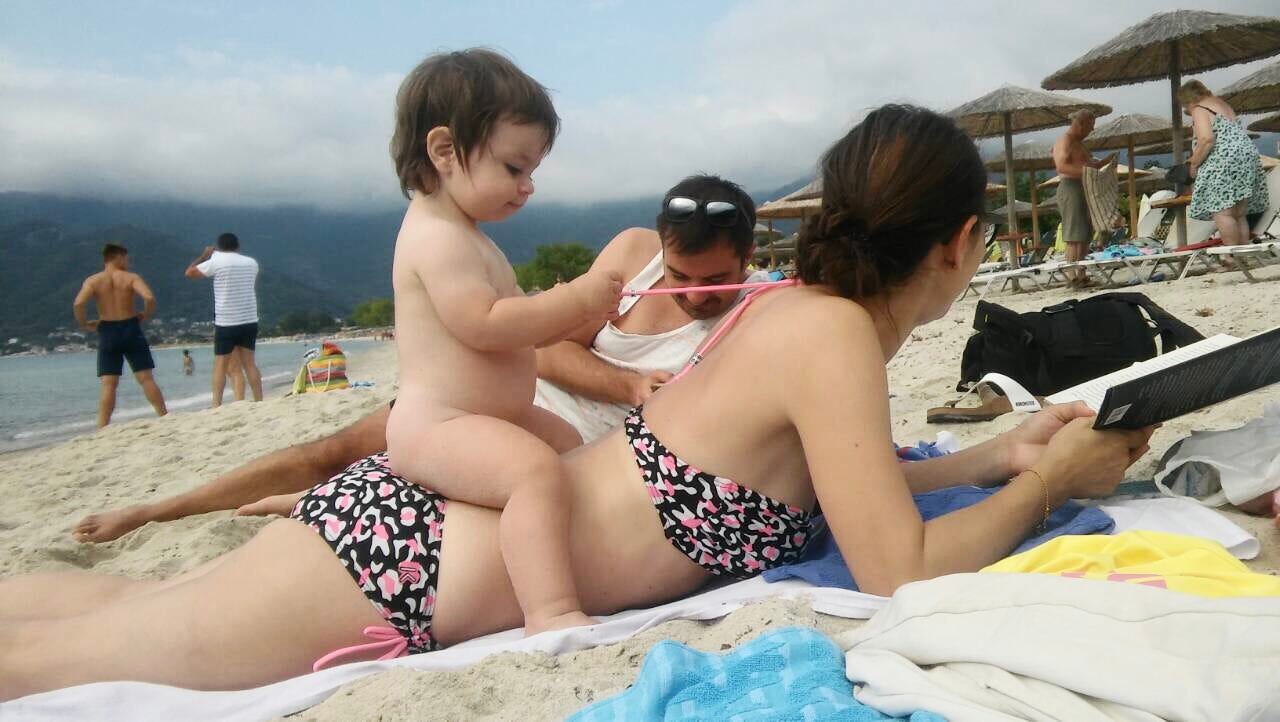
Even though I never stopped thinking of myself as a reader, there were about five years—between 2017 and 2022—when I barely read at all. When I did, it was almost entirely work-related nonfiction, grabbed in short, utilitarian bursts. Those years were also my sad years. It took me a long time to connect those two facts, and once I did, I realized how badly I needed air.
A brief sidebar:
Especially for anyone who has ever felt the surge of creativity move through them: if you are a reader, if you are an artist, you have to take that part of yourself seriously. If you don’t tend to it, the absence doesn’t stay neutral. It turns into an ulcer. Wanting to read and not reading feels worse, in the long run, than being tired because you stayed up late with a book. Thinking about the novel you want to write without writing it will always feel worse than feeling discouraged about messy, imperfect pages. I know this because I’ve lived both versions.
Eventually, I got tired of thinking about wanting to get back into reading without actually reading. My way back was, somewhat unexpectedly, through social media. I started following book nerds on YouTube, Instagram, TikTok, and eventually found my way to Substack. Social media became my gateway back into reading, and I say that with real gratitude. Sharing reading online is a labor of love, and it changes lives. It changed mine.
As I paid closer attention to how people talked about their reading online, I encountered the idea of the TBR in a more serious way and found myself fascinated. What a clean way to organize attention. What a way to signal seriousness. What a way to be a serious reader, a serious person.
In her Reading Life interview last year, Ochuko Akpovbovbo talked about how she keeps a note on her phone listing every book she owns, chooses a set each month, and commits fully. There is something undeniably appealing about that kind of decisiveness. You wake up knowing what you’re reading and why. At the far end of that impulse sits Ted Gioia’s Lifetime Reading Plan. Ted made a list of the books he believed one must read to feel “well read” and then—wait for it—read them. His confidence in his ability to stick to a plan is simply stunning to me. It rests on the belief that intellectual life can be ordered, even mastered.
I wanted to believe that.
When I tried to adopt similar approaches — several times, and with genuine effort — the experience was consistently unhappy. The list didn’t steady me; it tightened around me. Reading began to feel contractual. I carried a low-level awareness (anxiety?!) of what I was behind on, even while holding books I had chosen for myself. Something essential drained out of the experience.
At the same time, reading purely by impulse had begun to feel unsatisfying in a different way. Left entirely to mood, my reading scattered. I moved quickly, rarely staying with an idea long enough for it to deepen or change shape. I missed the feeling of sustained attention.
What eventually became clear was that I needed a form of structure that didn’t depend on enforcement. What finally worked for me was reading in projects.

A reading project is a container — sometimes thematic, sometimes centered on a single author — that gives my reading a center of gravity. The project holds my attention over time while allowing for drift, pause, and revision.
I’m starting 2026 with five projects: three carried over from last year and two new ones. I’ve grown attached to the idea of carrying projects forward and maintaining continuity year-to-year. Meaningful reading unfolds over longer arcs, and I’m no longer interested in compressing it into a calendar year.
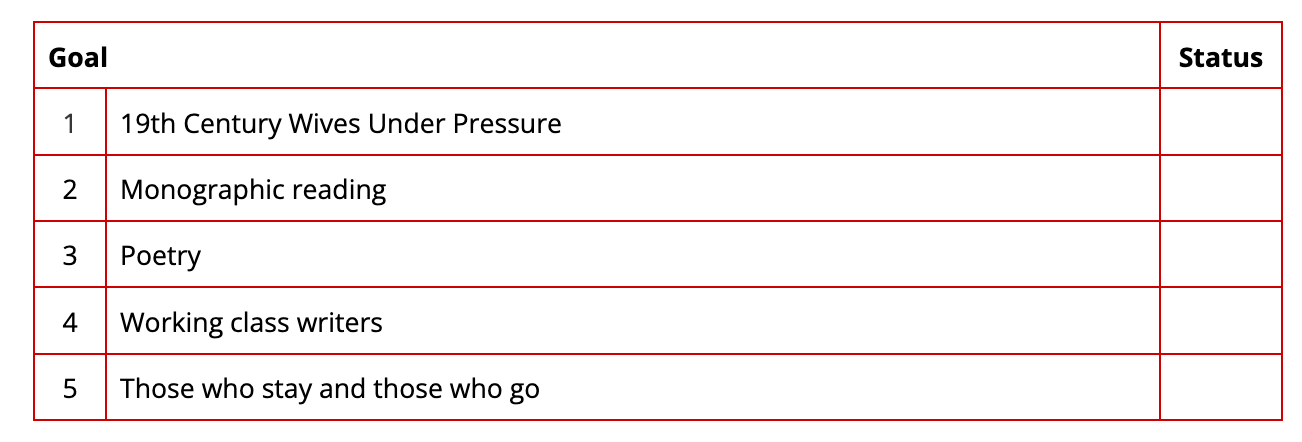
The Three Projects I’m Carrying Over
📚 19th Century Wives Under Pressure
So far, this project has included:
Madame Bovary — Gustav Flaubert
Anna Karenina — Leo Tolstoy
This year, I’ll continue with:
Middlemarch — George Eliot
The Portrait of a Lady — Henry James
I originally thought of this project as a playful way to catch up on classic titles. Halfway through, it has revealed itself as something more foundational—reading that has sharpened my interest in feminist literature by lingering on women navigating rigid social structures, structures that reward compliance even as they hollow out interior freedom.
📚 Monographic Reading (or, following my favorite authors down the Rabbit Hole)
Last year, this meant staying with writers who had already deeply gotten under my skin:
Ayşegül Savaş
Claire-Louise Bennett
Constance Debré
I came close, and made serious dents in the oeuvres of:
Elena Ferrante
Deborah Levy
Jenny Erpenbeck
Vigdis Hjorth
This year, I’ll continue. Debré has a new book coming out in March (from Semiotext(e)), and I plan to keep following the trails these writers leave behind — their references, affinities, their neurosis and intellectual preoccupations. Reading this way has felt better than any yearly list ever did.
📚 Poetry
Last year I aimed to read one poetry collection a month and ended up reading six. That number no longer feels diagnostic. Poetry changed how I read, full stop.
This year I’m keeping the same loose rule and starting with Anne Carson, who has intimidated me for years. I’m drawn to her work and feel unworthy of it in equal measure. I still worry I’m not smart enough to get it. I’m reading anyway. These days, when fear shows up, I pause and ask what it’s trying to clarify. Increasingly, it feels less like a stop sign and more like a signal to steady myself. It’s hard AND you can do it, I tell myself.
Two New Projects for 2026
📚 Working-Class Writers
This project grew out of the now infamous Checkout 19 list and a radio documentary by Claire-Louise Bennett.

It includes:
Tove Ditlevsen
Ann Quin
Annie Ernaux
On Kate Jones’s suggestion, I’m also adding:
Tillie Olsen
Grace Paley
What interests me here is how work, class, and constraint shape voice, ambition, and literary form.
📚 Those Who Stay and Those Who Go
This project supports my novel-in-progress, set in 1970s communist Bulgaria, and centers on political dissidents, artists, and intellectuals working behind the Iron Curtain. It also keeps returning me to a question I can’t let go of: how professional ambition lives alongside personal values.
Some early anchors (thank you, Emma K):
Siblings — Brigitte Reimann
Fog at Noon — Tomás González
Lesser Ruins — Mark Haber
Figures I’m reading around:
Julia Kristeva
Marina Abramović
Christo Javacheff
Georgi Markov
This is demanding reading, emotionally and intellectually. I’m excited to begin and also bracing myself for its impact—as someone who has chosen to build an intellectual life away from her place of origin, and who lives daily with both the benefits and the costs of that choice.

If this year’s list feels smaller than last year’s, that’s intentional. My professional life has reached an inflection point. I have less time, less slack. I won’t read as much in 2026 as I did in 2025. I feel a flicker of sadness about that, and also relief. Choosing fewer things more carefully feels like an adjustment to reality rather than a diminishment of ambition.

When our book club met last weekend, I was struck by how many people had arrived at similar conclusions through different routes. No one wanted numeric goals. Instead, people were shaping reading lives that could be sustained.
Here’s a sampling of some of the very practical, humane approaches to reading we talked about:
Genre “lanes” (one fiction, one nonfiction, one poetry, one classic at a time)
Slow-read communities with built-in pacing and guidance
Tandem reading (print + audio) for demanding books
Shelf-reading years and temporary book-buying bans
Location-based rules (bed-only books, morning books)
Theme-based curiosities carried across many texts
Language repair through reading in original languages
Medium-based goals, including returning to sustained paper reading
Author deep dives rather than constant novelty
Seasonal rhythms, with lighter reading protected in summer
Poetry as daily practice
Social goals focused on conversation
What stayed with me wasn’t any single method, but the shared orientation toward attention, pleasure, depth, and endurance.
And I have some questions for you:
When did reading start to feel harder for you — and what changed around that time?
What kind of structure actually supports your reading (if any), and what tends to shut it down?
What would “enough” reading look like for you this year?
I love your intentional reading and your 2026 plan. 🤩
I’ve started choosing books per week or per month that I plan to read, and depending on the emotional breadcrumbs I get from the most recently read book, I go from there. That’s been more helpful to me than having a large, overly ambitious goal for the entire year.
Enough reading would look like at least 3 books a month for me, but I’m not going to beat myself up if I fail some months, especially with how volatile our government is right now. It’s not that I’m prone to despair, but I do find it difficult to concentrate when people are being snatched from the streets and we’re being asked to show ID when we’re just existing outside. I refuse to look away AND I need my books, so if I can strike a balance with both of those, I’ll feel triumphant.
Thank you for this idea! I've got my 2026 reading sorted, just by reading this. I believe in cross-pollination of ideas, so having 6ish reading projects really allows me to focus and wander within my reading. My 6 Reading Projects for 2026 (and likely 2027) are:
1. Artists/Art History
2. Geometry of Nature/Biomimicry
3. Travel (lots of travel coming my way and I want to read what I can in preparation.)
4. Novels written as Journals, Letters (correspondence) and diaries
5. Pop-up, cut-out books, books as art objects
6. Fiction to Fall Asleep to (this often shows up as reading everything an author has written - I read Willa Cather's books repeatedly and it helps with not having to make more decisions.)
These categories have been present in my life for years, but now they have names and that somehow clears up some of the chaos in my mind. Thank you!