

How my commonplace notebook has enriched my experience of reading
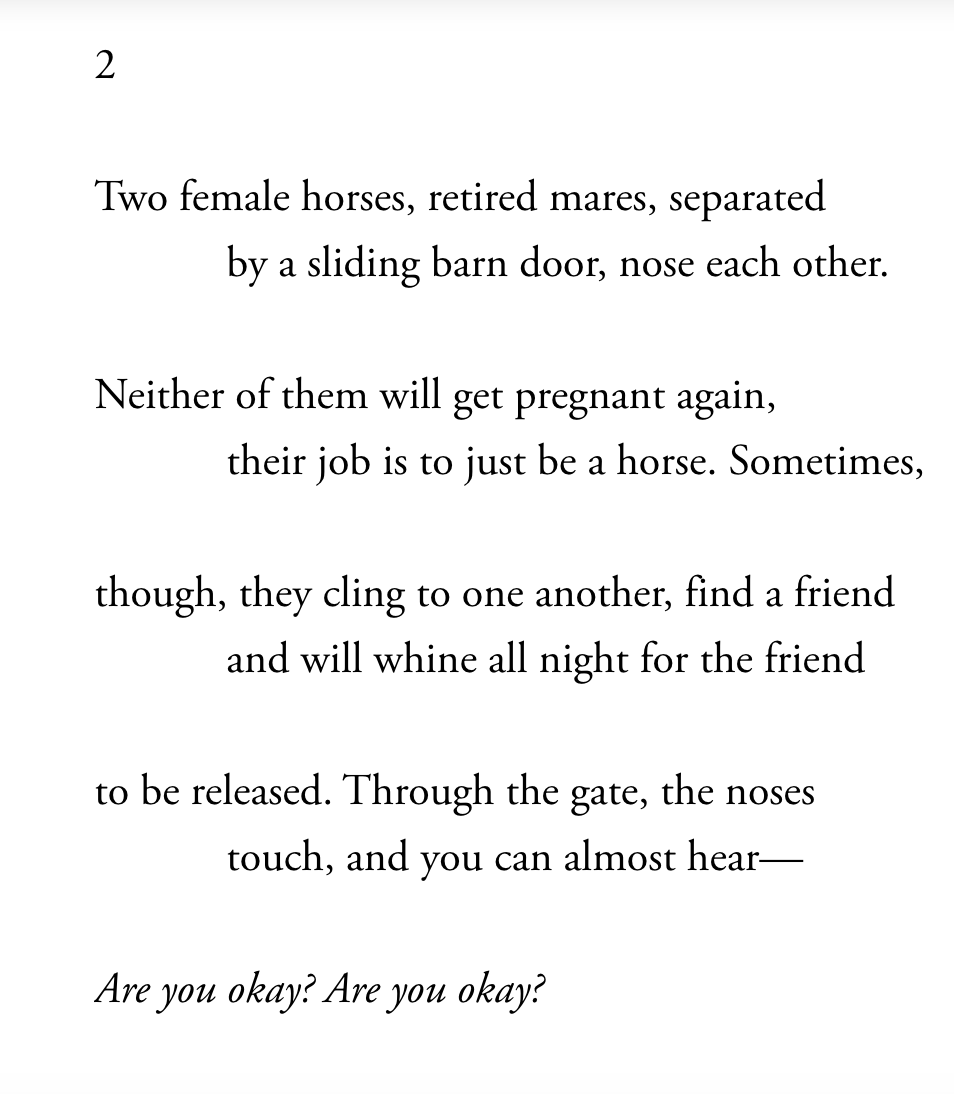
Through the gate, the noses touch.

Note: 50% off paid subscriptions + Community Zoom details for this coming Saturday, 1PM Central. See you soon!
About a month ago, I realized I had lost my commonplace notebook. It’s probably somewhere in the house, but in a home organized around artfully arranged piles of books, it has effectively disappeared. I’ve checked the obvious places and then the less obvious ones. My best theory involves my nine-year-old daughter, who is fascinated by my notebooks and knows how much they matter to me — which, of course, makes them irresistible. So far, however, she insists she doesn’t have it.
After a few days of searching, the frustration I felt got replaced with an almost despondence. I felt absolutely devastated by the loss.
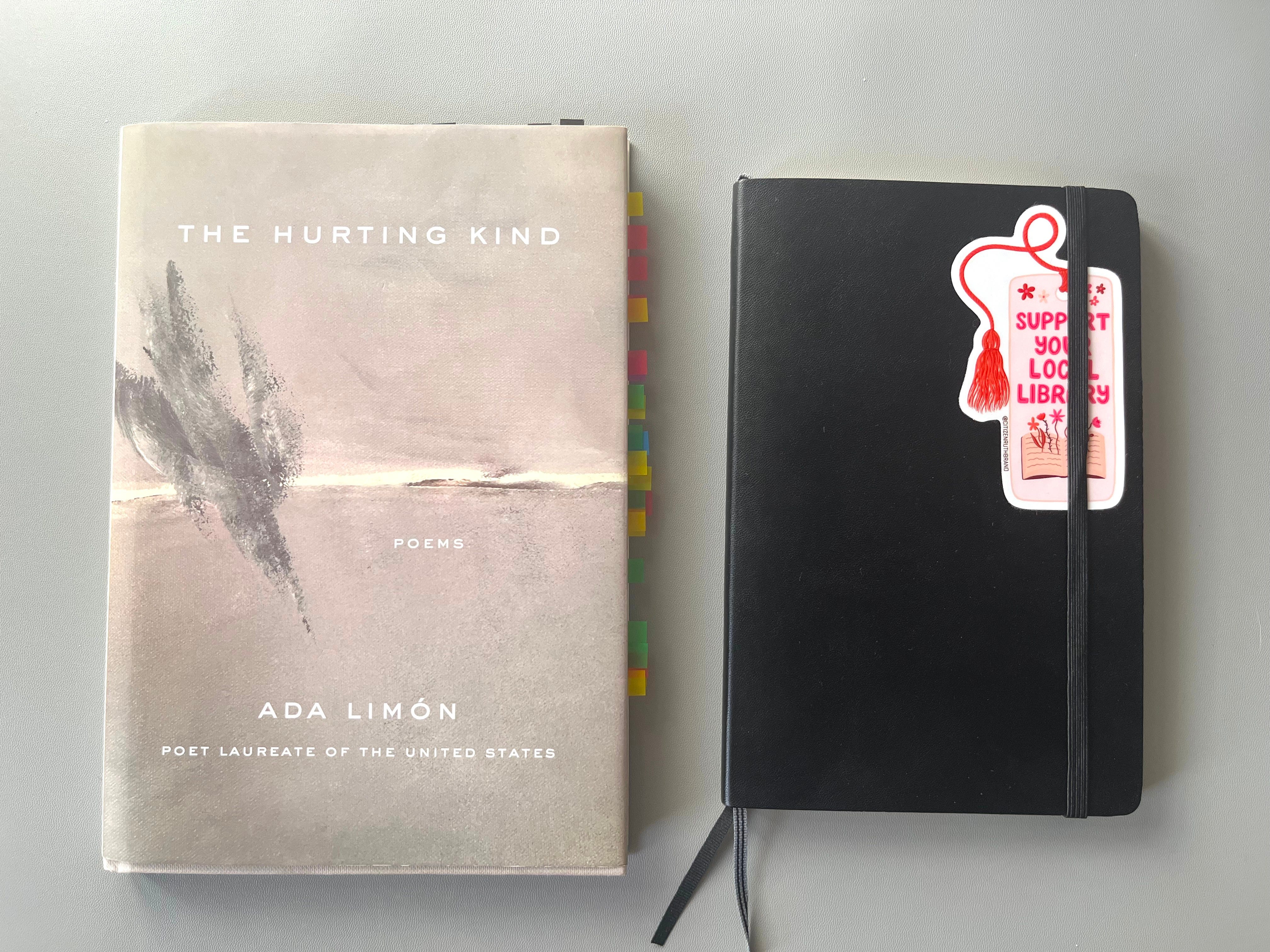
I started commonplacing a little over a year ago for reasons that were almost entirely sentimental:
I have been thinking a lot lately about how my 7-year-old daughter will remember me when I’m not around anymore, really wanting to leave her with a lasting impression of her mother living an inspired life. I know it’s difficult and probably unadvisable to engineer memories, but she already has an awareness that I am a reader. What I want to be able to leave behind is an embodiment of my reading spirit. Our family book collection will be hers, of course, but I also love the idea of leaving her a stack of notebooks that contain quotes that challenged, moved, or entertained me. I want her to have a record of what made me feel alive. No shade, but my stack of Morning Pages journals is not it.
After researching the practice quite a bit, I joined Jillian Hess in her Commonplace Book Club that January and was immediately hooked. After I finish a book that particularly spoke to me, I sit with my notebook and copy out the passages that stopped me — not everything I underlined, only what feels essential to preserve. Before I started, I used to keep this kind of thing in my phone, a note called “quotes” that I added to sporadically but didn’t really return to. Practical, because I could search it… but in reality, inert.
After doing this for a while, I began to feel that handwriting makes you inhabit a sentence differently than copy/paste. By the time you’ve written a passage out, it has moved from the page into something that is almost, if not quite, yours.

When I started, I expected to copy the passages and watch the collection grow but I thought of this as a gift I was making for my kid. Almost immediately, however, I noticed that I wasn’t just writing in the notebook. I was READING it, too. I just kept it on my desk and would often pick it up, flip through, stop somewhere. And the passages I had captured just sort of … stayed with me. I wouldn’t say that I was deliberately pursuing any kind of self-study or personal curriculum. I was just allowing myself to spend time with whatever was tugging at my heart at the time.
Before commonplacing, I mostly thought about books in terms of plot, ideas, or overall emotional impact… but copying passages by hand slowed my reading down enough for me to begin noticing something else entirely: voice, rhythm, cadence. The strange and deeply intimate texture of someone else’s mind moving through language. haley larsen, phd has several posts that guide through close reading exercises and, unsurprisingly, they all involve starting by copying your passage by hand.
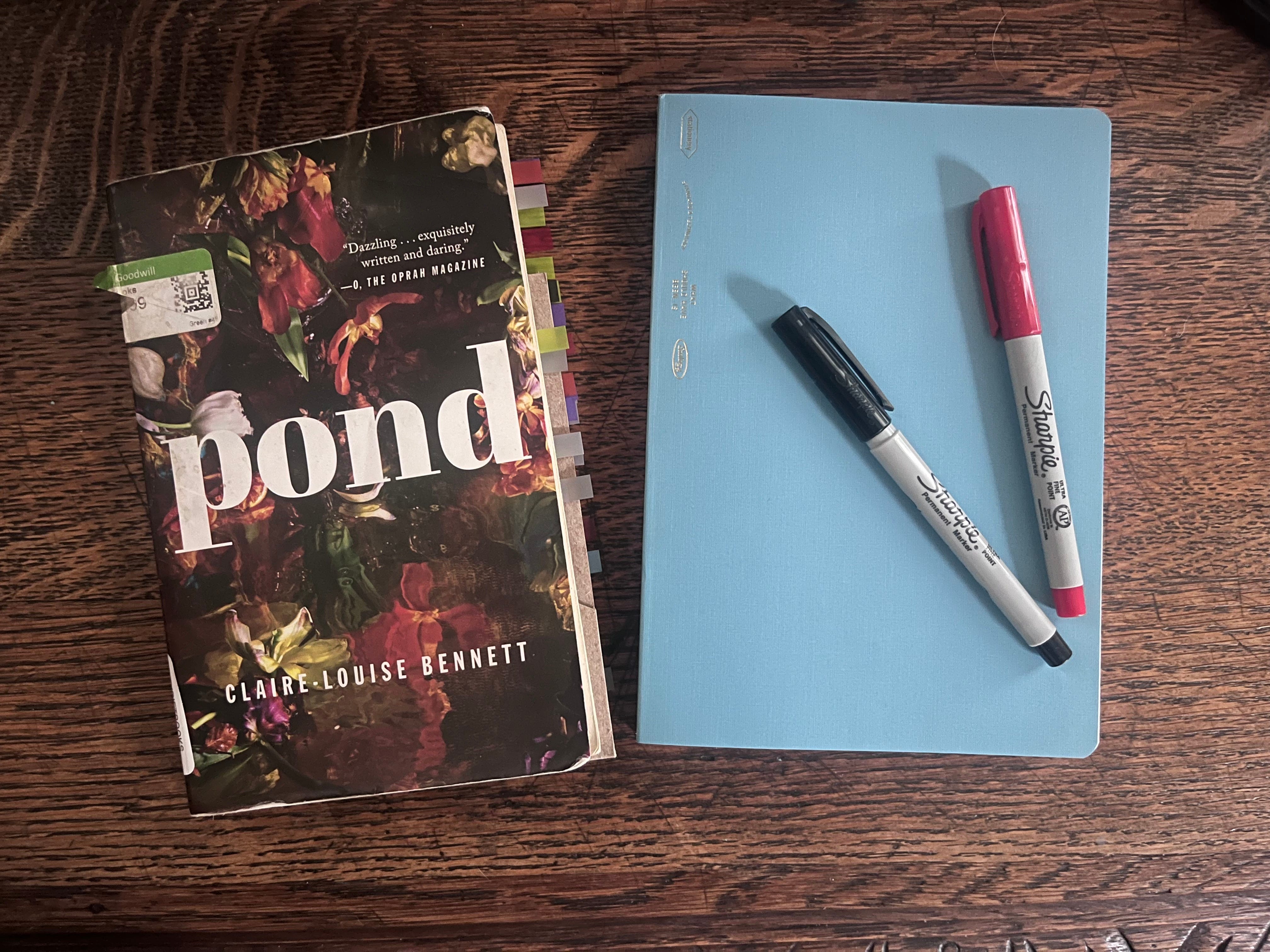
I read and commonplaced Pond by Claire-Louise Bennett that January. By December, I had read everything she’d published and compiled a list of every book mentioned in Checkout 19 — around 130 titles. As you can imagine, I have spent a lot of time trying to diagnose this obsession and I don’t think any of that would have happened without commonplacing first. Copying Pond just made the book so alive for me. I know it will sound kind of kooky, but I kept feeling that whoever I was copying was whispering in my ear…
Looking back, I think the copying and rereading was training my attention. I was beginning to hear her. And once I started hearing style at that level — the humor, the perception, the peculiar sentence logic — it became almost impossible to go back to reading quickly or passively. I also don’t think it’s a coincidence that an author who writes so uniquely about thinking and interiority would be the one who unlocked this practice for me. Her work feels like a portal into the consciousness of a book.

When I first wrote about commonplace journaling back in February 2025, I mentioned the fact that I had added an index — a practical solution to a discoverability problem. What’s the point of a notebook full of quotes if you have to read through the whole thing to find what you need? So I reserved five pages at the back, organized by letter, and added themes as I went: misanthropy, friendship, solitude, disappointment, lost youth.
What I didn’t anticipate was that the index would become its own source of insight — one that operated on a thematic level rather than a stylistic one. Here’s what I wrote about it at the time:
As my index grows, it reveals patterns in what catches my attention across authors and genres — themes of belonging, feeling seen, disappointment, solitude and isolation, lost youth. It’s becoming a map of my reading mind. Far from being pointless and backwards looking, it is showing me what I actually care about before I’ve had a chance to put my finger on it myself. It honestly feels like magic.
I still feel that INDEX-ing produces so much magic but those early observations didn’t quite capture the compounding effect of it over time. It is SO different from what annotation gives you. Annotation is intimate with a single book — it captures your relationship to that text, that argument, that sentence. The commonplace index cuts across everything you read (or, commonplace). It shows you not what you thought about a book, but what you think, full stop.
Over time, certain themes began gathering weight. Such an odd thing to describe… but in all these books I was reading, certain emotional and philosophical preoccupations kept surfacing. I realized that even though I wasn’t intentionally choosing books by theme, I was probably subconsciously working through certain concerns — in life, in reading — and letting those themes jump out at me.


Reading stopped feeling random. My obsessions stopped feeling arbitrary. Over time, it became difficult not to notice the continuity in what moved me across books, genres, and (I expect) even years of reading. Solitude, for example, or disappointment, or the strange relief of no longer needing to be exceptional. They appear and reappear across my notes on writers who have nothing else in common.
Once I noticed those patterns, I began trusting my instincts as a reader much more deeply. I stopped worrying so much about whether I “should” be reading something and became more interested in following attraction, intensity, fixation, appetite — whatever made me feel more awake. My reading life already had an internal logic. I just hadn’t known how to see it yet.

I have always wondered and have felt deeply envious of how some people are able to quote entire poems or book passages from memory. I assumed it required a special kind of intellect or brain capacity that I did not believe I possessed.
It turns out that memorization has less to do with intellect than with attention and repetition. Copy a passage you really love. Return to it. Return to it again, simply to enjoy. The memorization then happens almost without you. By the time I lost my notebook, I could reproduce several passages close to perfectly. Not many, mind you, but some.
The first passage I could reliably reproduce was Bennett’s famous banana paragraph from Pond:
Sometimes a banana with coffee is nice. It ought not to be too ripe — in fact there should be a definite remainder of green along the stalk, and if there isn’t, forget about it. Though admittedly that is easier said than done. Apples can be forgotten about, but not bananas, not really. They don’t in fact take at all well to being forgotten about. They wizen and stink of putrid and go almost black.
I think this passage stayed with me because Bennett notices ordinary life with almost unbearable specificity.1 After months of copying her work, I began catching myself paying closer attention too — to mundane objects, passing thoughts, the emotional atmosphere surrounding small things.
This morning I went into the bathroom after my husband and daughter had left for school and noticed he had left the door of his medicine cabinet open. He never does that. I suddenly felt this strange wave of sadness wash over me, imagining him moving through his morning distracted or anxious or lost in thought. As I closed the cabinet door, I could feel this oddly loaded emotional atmosphere around such a prosaic object. It felt tender and dark at the same time.
The following passage has also become a favorite:
Quite often I’m terribly disappointed by how things turn out, but that’s usually my own fault for the simple reason that I’m too quick to conclude that things have turned out as fully as it is possible for them to turn, when in fact, quite often, they are still on the turn and have some way to go until they have turned out completely.
A sentence that initially feels merely interesting can, through repetition and rereading, slowly become something closer to wisdom. I found myself returning to this passage whenever I felt impatient with my own life — too quick to declare something over before it had fully unfolded.
And Ada Limón, from Foaling Season — which I copied early in my poetry reading life and still return to constantly:
Increasingly, I suspect the practice is less about preserving quotes and more about preserving ways of feeling and noticing that I do not want to lose.
Trying to understand why I got so sad about my lost notebook, I realized that the grief I was feeling was not about the missing object which — with some effort — I can reproduce. I kept reaching for it without thinking — in between tasks, at the end of the day — only to remember it wasn’t there. What I missed was the ability to drop back into that accumulated space of attention, a shortcut to the part of me that reads and thinks and is patient enough to give it all time to become what all of THAT is trying to be.
So, yeah, the grief was out of proportion to a missing object. But it was proportionate to losing a self.

Last week I decided I was done moping and started a new commonplace book. Jillian Hess is running her spring Commonplace Book Club — copy a quote a day into a notebook, for a month — and there was something right about the symmetry of joining again at the beginning. I waffled about how to begin and then, of course, picked up Pond and thought… I must have a record of this book that has given me so much.
I am again enjoying the intensity of the challenge. Doing a little bit of this every day requires commitment. (Outside of the challenge, I typically commonplace once a week max). But Brigitte Kratz agreed to be my accountability partner and now each day we text each other a picture of our quotes. I love the time I spend in my notebook and I look forward to her texts even more.
Through the gate, the noses touch.
My other favorite story from Pond is the one about the stove knobs.
Petya, oh my gosh, YES on indexing. I just went through a program called “The 100 Day Reckoning” with the playwright Karen Hartman and we indexed our own writing with cards using a smart notes method. I started discovering all these patterns in my writing. Your reflection here is making me want to do this with my reading using the commonplace method you describe. Thank you, thank you for these reflections and ideas (and sorry you lost your notebook and am grateful it led to this reflection).
Thank you for this lovely article. The older I get, the more amazed I am at how we can live in our bodies and not understand ourselves very well. To me, what this commonplace practice points to is a sort of permission to allow our reading to act as a kind of witness to our lives. Why are we pulled to themes/characters/turns of phrase? How does our reading teach us, guide us? What do we learn about ourselves through the things we read? In short, who are we? What do we love and what do we need to know? I love my journals, too. Thanks for sharing your process, and I hope you find your old journal. I bet it turns up and what fun it will be to read it again!