

Source Material: a conversation with Stacey Yu
The author of KITTEN on the broken promise that inspired her debut novel

As we tumble forward fall and watch award lists and buzzy new releases file past, I have been thinking a lot about what makes a book find its moment. I know that IT IS COMPLICATED and there is no ONE THING that determines whether a book will be received as intended. However, I have a theory.
I believe the best books contain, somewhere inside them, a core — a source of energy that resists rational explanation. I think that most books grow from just such a core but not all authors manage to build outward from it without losing it. The ones who do — who let the book grow while keeping that source intact — are the ones who break out.
Kitten by Stacey Yu came out earlier this week and, surely, by this point you have seen a review, an author interview or any number of thoughtful pieces about the book. In a sea of releases, Kitten is clearly breaking out.
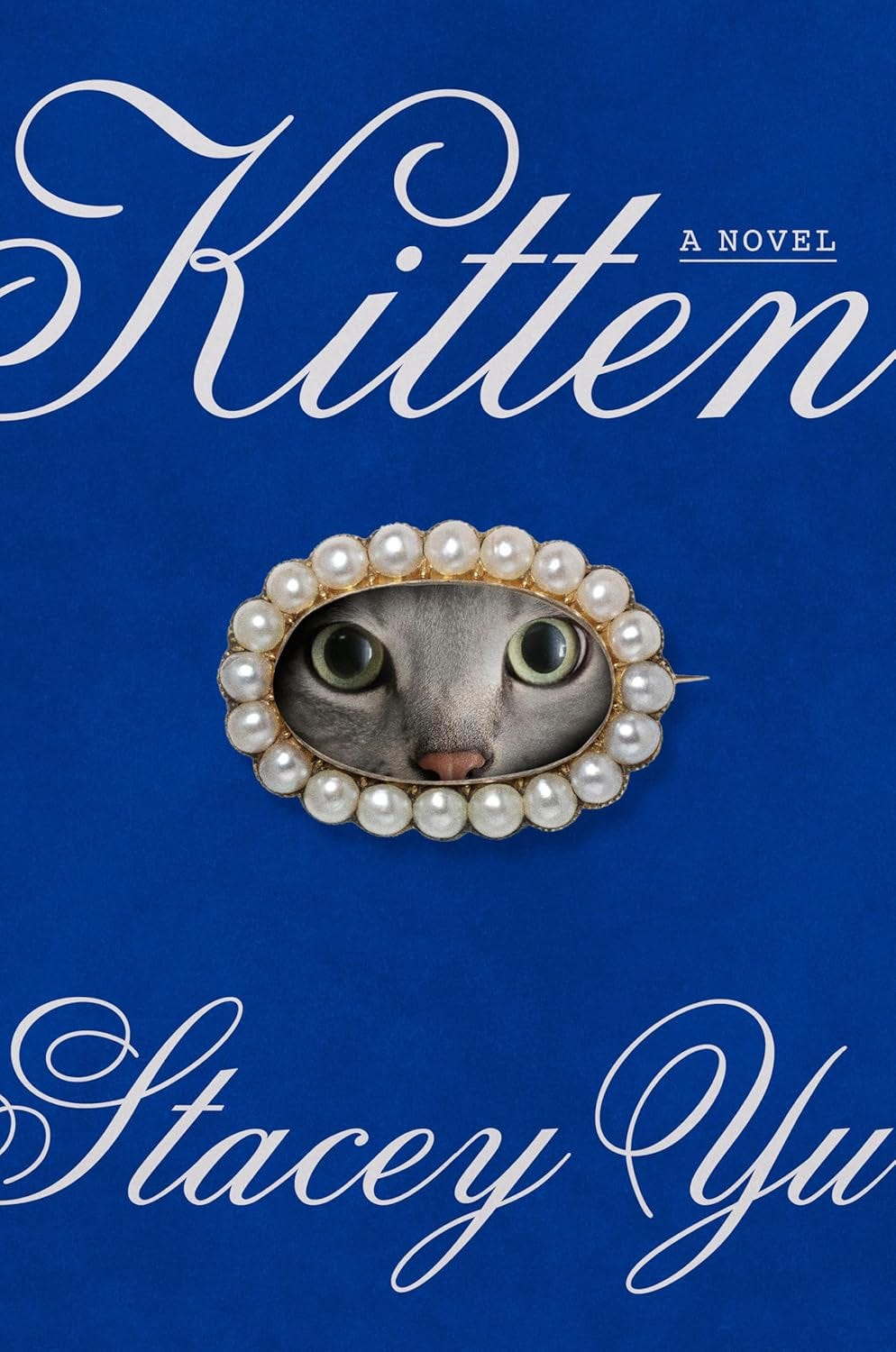
When I first read the book back in March, I wrote about “the discomfort of going home but not quite belonging there anymore, while not having anywhere else that feels better just yet.” I thought that ache was the book’s core.

Having now read the material Stacey shared with me for this interview, I think I was only half right. The ache is real, but it’s rooted somewhere even more specific — in a promise made to a mother, and the particular betrayal of breaking it by simply growing up. There is such vivid feeling, innocence and despair in that broken promise that somehow all of the internet is losing their mind over a book about a girl and her boyfriend’s cat.
It truly IS charming. Please read it.

The conversation that follows is the second installment of Source Material — an occasional series of conversations with writers I admire, tracing the raw material behind their work.
Stacey, please tell us about your new book! What was the idea / character / image that set you on your path to write it!
Kitten is about a woman who once promised her tricky, inordinately affectionate mother she would never grow up… and is now, God forbid, growing up. It is about class, love, the allure of helplessness, and one very special cat. Think Moshfegh’s My Year of Rest and Relaxation with more heart, Sigrid Nunez’s The Friend with more edge, and Levy’s Hot Milk but swapping the sensual Spanish seaside for a moody New England one.
I’ve always wanted to write a book about growing out of childhood, particularly how our narratives of childhood interfere with our experience of adulthood. As a child, I couldn’t imagine ever growing up. And as an adult, I was constantly romanticizing my own childhood, convinced that both I and the people I loved were happier when I was younger. I wrote Kitten to confront and detangle this feeling, but also to honor it. Childhood is the one thing we all, every single one of us, share in losing.
Finally, to address the cat in the room…a big component of Kitten is that this lost young woman, Katie, develops an unhealthy attachment with her boyfriend’s cat. I’ve always been drawn to the non-human and the animal, and what our relationships with them say about ourselves.
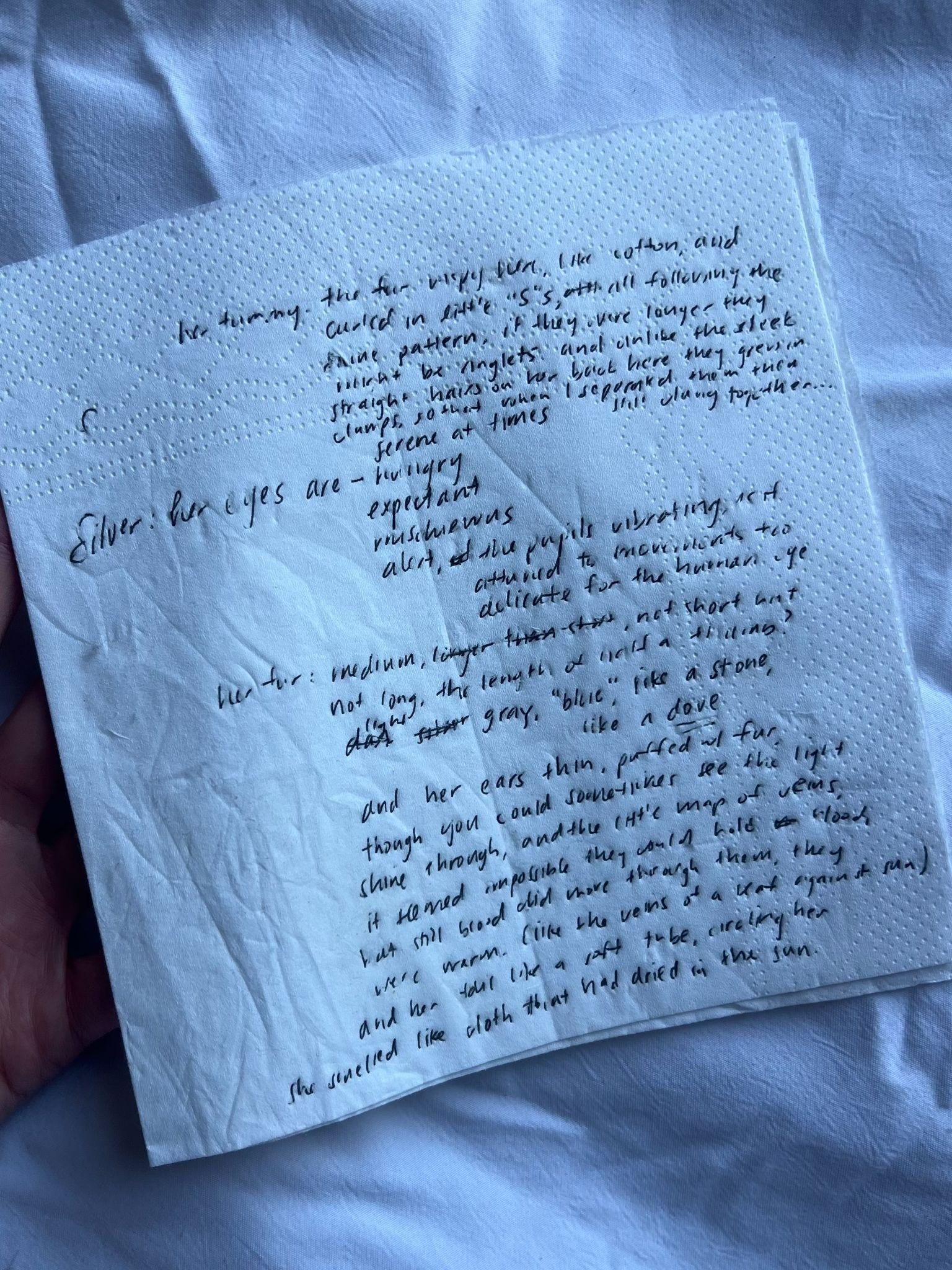
I feel an affinity with the vulnerable and the little, and thought it would be fun to take that affinity to the nth degree.
Please share 3 to 5 books that make sense alongside KITTEN: inspiration, theoretical references, works you are fighting with?
Hot Milk by Deborah Levy, about a woman named Sophie who accompanies her hypochondriac mother to Spain to seek increasingly bizarre treatment for a mysterious ailment. Unsurprisingly, this was a huge inspiration for me. I was struck particularly by the lines “My love for my mother is like an axe. It cuts very deep.” which recur throughout the book. I loved the cleanness and intensity of this sentiment, violent both in its imagery and simplicity. The prose in Hot Milk is otherwise very sensorial and descriptive, so the bluntness of language used to describe emotion is especially striking. It feels very true. You can use all the beautiful language in the world to describe any random place or person, but when talking about the thing you love and fear most in the world, you need only a few simple words
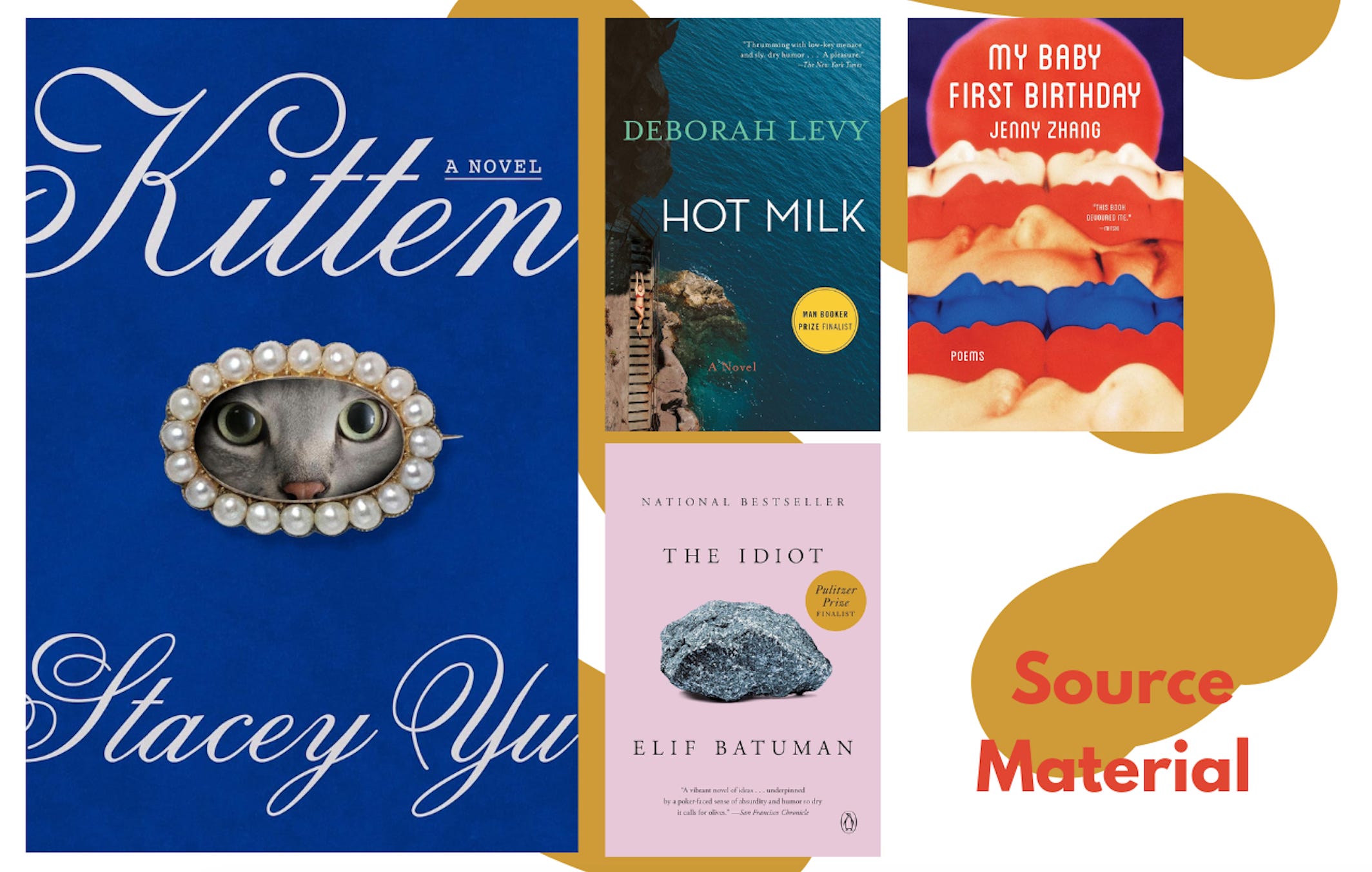
My Baby First Birthday by Jenny Zhang. This is a poetry collection, and I actually quote one of its poems in my epigraph: “I told the love of my life to baby me but he fell short.” Zhang’s writing is singularly evocative, obsessive, gross, and beautiful. She’s never afraid to be base; she almost dares you to call her immature. The collection explores the drama of being born, the humiliations and ecstasies of life and love. It feels very childish and animal in the best way, both qualities I wanted to harness in my novel.
The Idiot by Elif Batuman. This book taught me the importance of voice. It was the first time I encountered a voice so alive, compelling, and self-possessed that it almost obviated the need for plot, or conflict, or any of the other things that give a book momentum. Everything was interesting because the narrator was interesting. Everything she observed had value because of the way she observed it. With Kitten, my narrator is extremely passive, which obviously risks a boring reading experience. Crafting a distinct voice was one of the ways I got around that.
Now that the book is done - what are you doing / reading / listening to in order to take a breath from the intensity of the writing process?
I am saying yes to any and all plans. I am seeing more of my friends than ever. I find myself cherishing and seeking more physically grounding experiences - reading outside in the park instead of my house, going dancing - almost as a contrast to how psychological and isolating writing and publishing a book is.
As for reading, I find myself drawn, at the moment, to contemporary backlist novels. Leaving the Atocha Station by Ben Lerner was an absolute delight and shock to the system. I just read Outline by Rachel Cusk, a big blind spot of mine. And I also recently finished my first Elizabeth Strout, Olive Kitteridge. Though, as far as novels about the aftermath of 9/11 and Bush’s America go (joking, ish), I prefer Atocha.
My Kitten playlist has been such a grounding force throughout the writing of the novel, but I kind of can’t bear to listen to it at the moment! It’s so moody and throws me right back to when I would take hour-long walks by the sea, wet-eyed and frustrated and doubtful that I would ever finish the book, just begging for my brain to come up with something that would solve everything.
I listened to the song “Crybaby” by Nanna for like one month straight. I felt it shared an emotional heart with my novel, particularly the lines “All the very best of me was given to the dogs on the street / Well, I don’t have a problem with crawling on fours.” It’s strikingly vulnerable, almost over-exposing in its confession of loneliness. That, to me, was my character Katie.
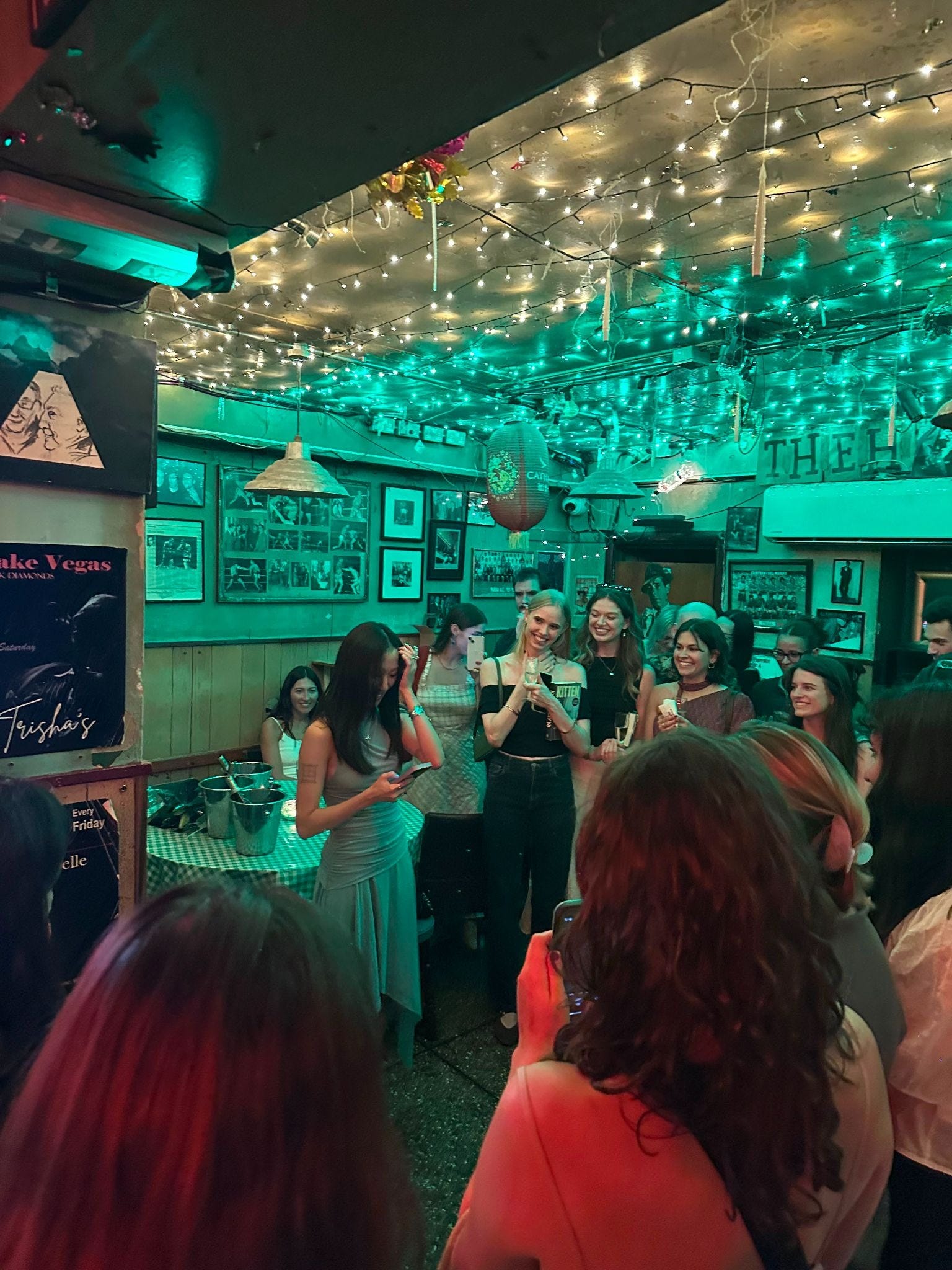
Happily, I have a new Kitten related playlist: one for the launch parties I’m throwing in London and New York. It starts with the below song, which sounds to me like joy and possibility.

As luck would have it, I have read two of Stacey’s three reference books — Hot Milk and The Idion — and I am struck by how different those two books are from each other but how much sense they make as a backdrop to Kitten and how much sense they make together as a group! I haven’t read Jenny Zhang’s poetry collection but I am familiar with her work from when she used to write one of the best personal style blogs on the internet (with Esmé Weijun Wang, I can’t be the only one who remembers!!!) …. so My Baby First Birthday is an instant add-to-cart moment for me.
⚡️ Now, let’s chat about it all:
Did you notice how frequently Stacey quotes favorite lines from novels and music? I felt really inspired to be better about memorizing my favorite lines from the books I love.
I loved Kitten and I have really enjoyed reading Stacey talk ABOUT Kitten. What is your take on reading writers interpretations of their own work? Do you care or do you let the work speak for itself?
Are there other books or authors whose source material you'd be curious to learn about?
I’m loving Source Material - very much enjoy learning about the threads of other materials that inspire and influence an author’s work.
I love source material, it enriches anything I read to know about the writer, their motivations, their lives. It adds another layer of meaning to the work for me, one I don’t want to do without. Thank for you this interview, I’m excited to read this one!