

Source Material: a conversation with Emma Copley Eisenberg
On fat liberation, Philadelphia, and writing your way back to fiction

In 1935, Walter Benjamin wrote about aura in his seminal essay The Work of Art in the Age of Mechanical Reproduction. For Benjamin, aura describes the quality that makes an original work of art irreducible. Not simply beautiful or well-made, but… singular, present in a way that resists reproduction. He was writing about paintings and photographs, but I’ve been thinking about his idea in relation to books, and specifically in relation to the experience of reading a book that feels like it could only have been written by one person, at one particular cost, out of one particular life.
The book that got me thinking about aura was Fat Swim by Emma Copley Eisenberg which I reviewed in my April round-up.

In the book — a collection of connected short stories — Emma Copley Eisenberg writes about fat bodies, queer bodies, bodies in pools and bars and bedrooms in a way that doesn’t aestheticize or explain. She doesn’t make fatness a metaphor for something else. She makes it exactly what it is: a condition of being in the world, with all the negotiation and visibility and longing that entails. The book exists in its own atmosphere.
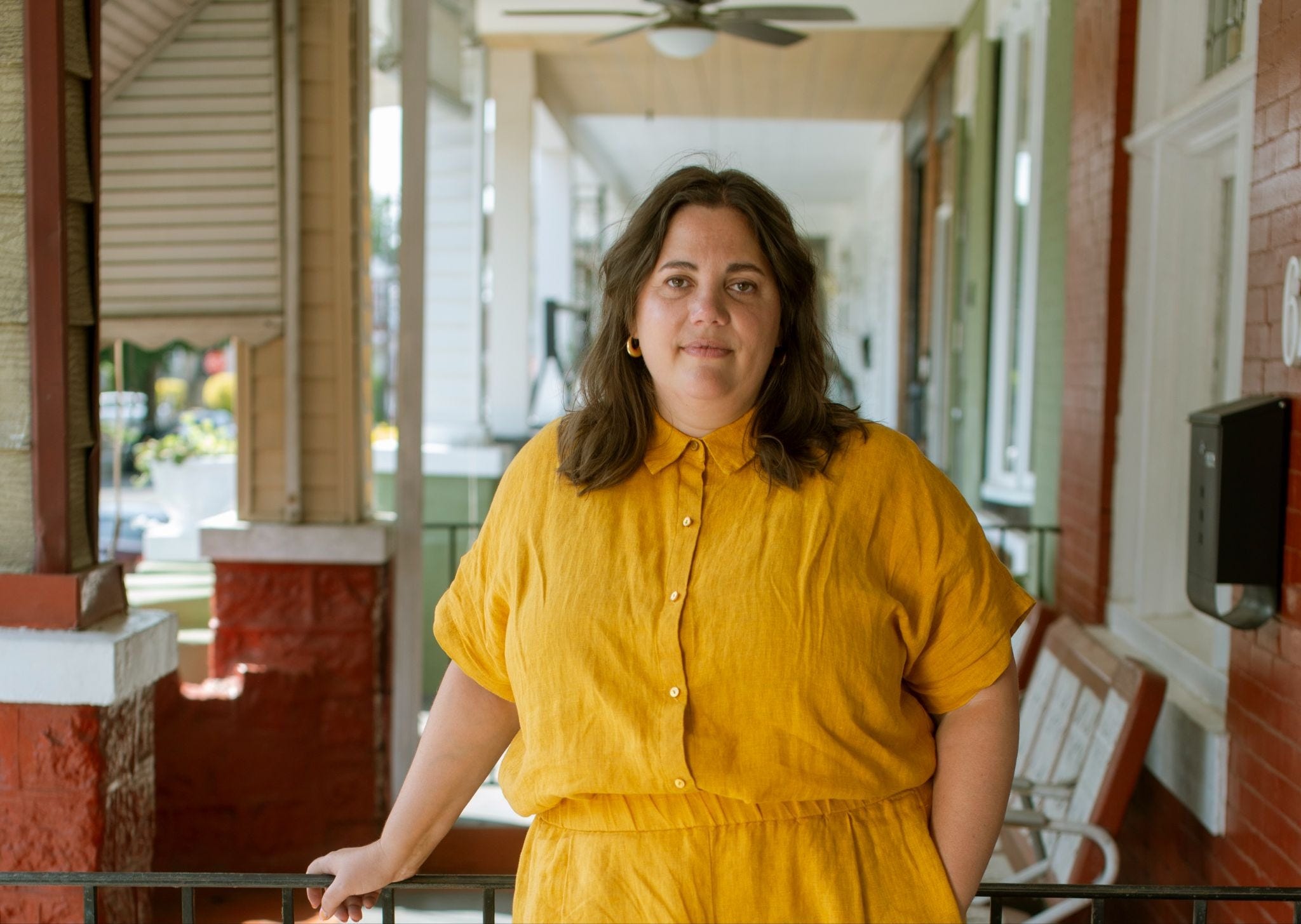
You feel it as soon as you’re inside it and you feel its absence when you leave. A lot of the book is set in and around Philadelphia and the whole time I was reading, I could feel that distinct Philly thing that anyone who has spent any meaningful time in the City will be able to pick up, even though it is almost impossible to describe. The book feels approachable in this way… but it’s entirely an object of its own. That I believe, is the feeling of being within the book’s aura: nearness and distance simultaneously. Something that holds itself slightly apart even as it pulls you in.
I’ve wanted to understand the conditions that made this book possible — the years, the faith, the landscapes that unlocked the whole thing. I am not trying to demystify it but I really think the world a book comes from is itself worth attending to… and I am the kind of reader who after much hemming and hawing decided to go straight to the source and fucking ask.

This conversation with Emma is the first installment of Source Material — a new occasional series in which I talk to authors whose work has that quality and try to understand where it came from. If my Reading Life series is about how readers read, Source Material is about what writers draw from. I already have the next one lined up for July — it’s going to be a good one!
Emma, please tell us about your new book! What was the idea / character / image that set you on your path to write it?
I have been working on FAT SWIM for twelve years and in many ways it is the record of how I lost belief in writing fiction and wrote my way back to it. There are several stories in the collection that reflect this ambivalence, that are almost essayistic. The earliest story, Ray’s Happy Birthday Bar, began at the very end of my MFA program and I just fell into the voice of Tracy, a kind of brassy armored woman wrestling with having given a kid up for adoption. Tracy’s voice helped me break the assumptions I’d been working with in grad school that serious literary fiction couldn’t be funny and it couldn’t be about the body.
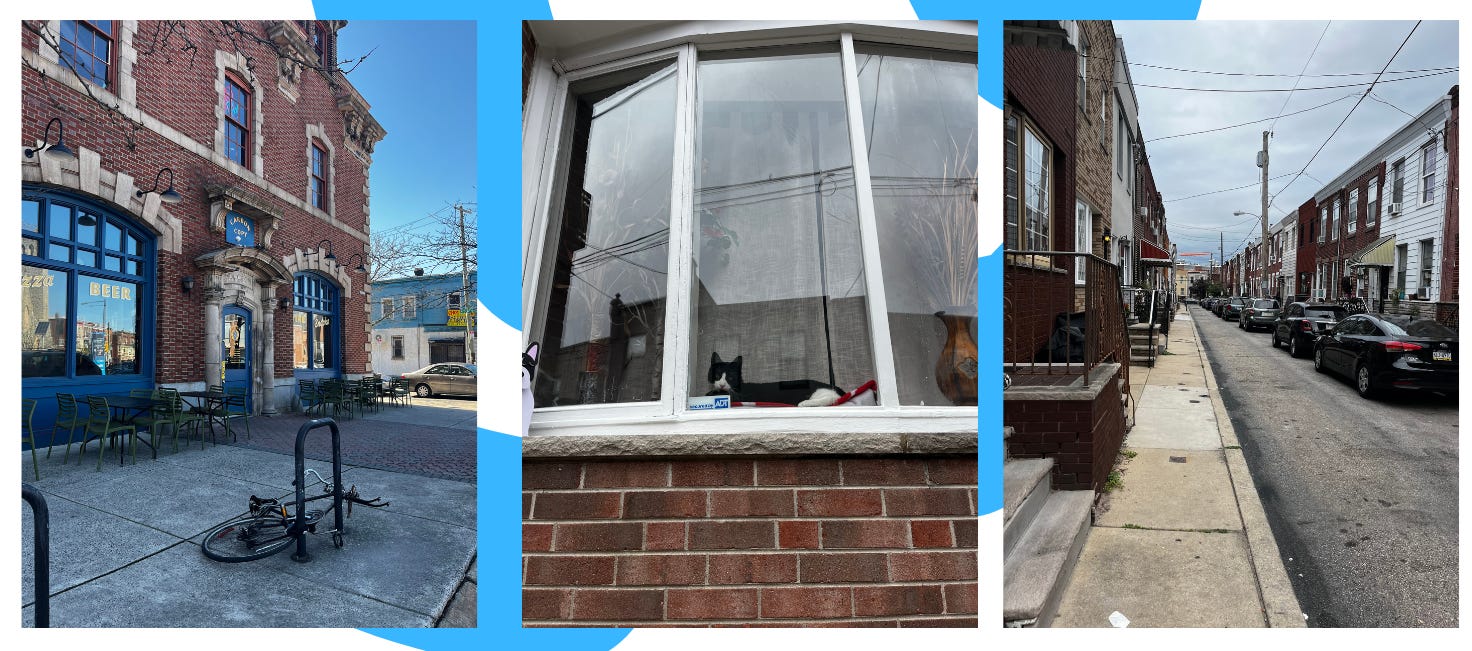
But the book FAT SWIM really came together as a united project when I wrote the title story, which is about a little girl who falls in love with a group of fat women at her local public pool. That story started with an image — I’d become part of a fat liberation group and someone suggested we go to the pool together. As I was swimming with my friends, I looked up and saw a plump little girl watching us. What is she seeing? went my writer brain, and the story was born.
Please share some books that make sense alongside FAT SWIM: inspiration, theoretical references, works you are fighting with?
Bryan Washington’s Lot for the way it does with Houston what I was trying to do with Philadelphia — use the geography of a city to show characters living in spatial proximity and grappling with physical, embodied concerns.
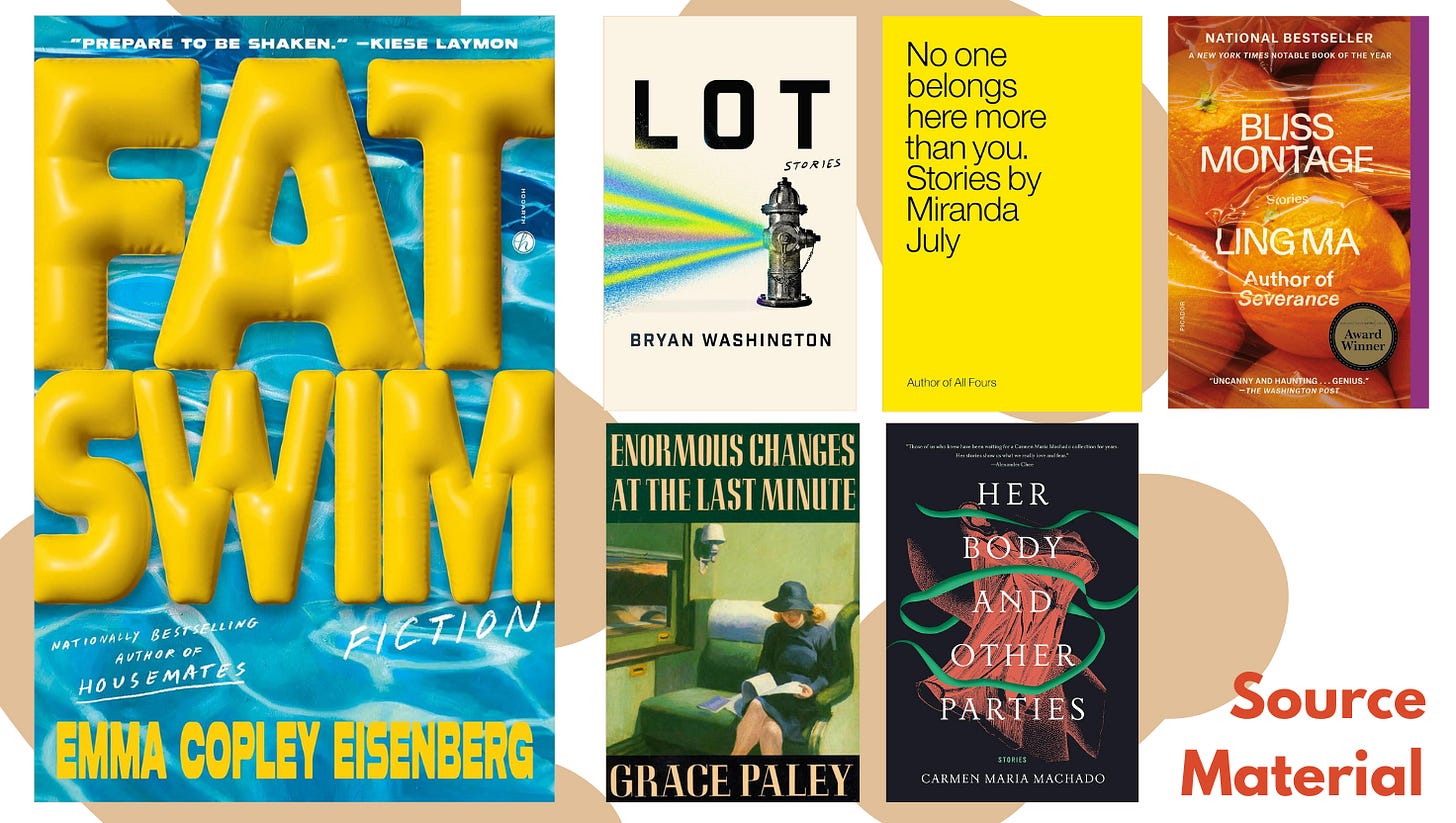
Miranda July’s No One Belongs Here More Than You for how weird it is and for its respect for the surreal experience that is being a person with a body — particularly in her story The Swim Team.
Carmen Maria Machado’s Her Body and Other Parties for its literary treatment of fatness and capacious approach to form and genre.
Ling Ma’s Bliss Montage for its obsession with objects and describing the physical world.
Grace Paley’s Enormous Changes At the Last Minute (aspirational).
Now that the book is done - what are you doing / reading / listening to in order to take a breath from the intensity of the writing process?
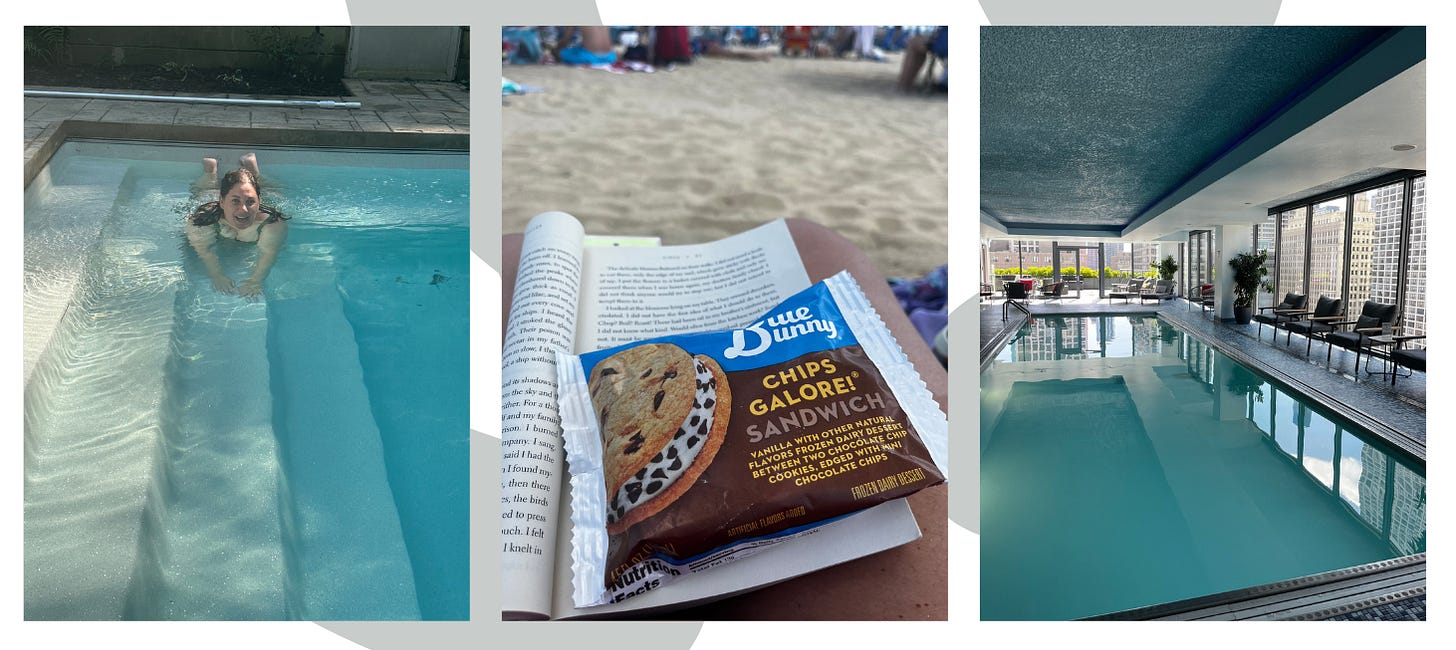
Swimming! I’m trying to swim in a public or affordable pool in every city I go to on book tour.
Reading poetry — Megan Fernandes and Diana Khoi Nguyen and Chet’a Sebree are on current rotation — and then printing out poems and putting them up on the side of my little free library so people can see them.
Making collages — I want to print out reviews of FAT SWIM and cut them up and make art out of them to say thank you for all the time people spent with my book.
Walking around my neighborhood to get a cookie.

I love it so much when a book refuses to let you move on from it and I am truly happy to have such a deep list of references to help me hold on to Fat Swim a little while longer. I read that Miranda July short story collection when it came out and even though I don’t remember individual stories, I do remember being delighted by how weird it was. Also, I just started reading Grace Paley last month with Kate Jones as part of her Short Story Salon… today’s mention of her work makes me doubly excited to keep going. But, honestly, everything mentioned on Emma’s list is now on mine.
⚡️ So, let’s chat about it all:
Have you ever read a book that felt auratic — like it existed in its own atmosphere, slightly apart from everything else? What was it?
I loved the way Emma described the books and authors she is in conversation with. Have you read any of these works?
Emma's Philadelphia is so specific you can feel it even if you've never been. Is there a city that lives in your body and have you ever encountered it in fiction?
Emma spent twelve years writing her way back to belief in fiction. Have you ever lost faith in something you loved and found your way back to it?
so excited for this new series! Source Materials - what a great concept. The attention and care you put towards reading is inspiring Petya! I just read Enormous Changes at the Last Minute, and it was one of those books that I know I will keep returning to. Have never heard of it or Grace Paley before picking it up in a used bookstore. Seeing it mentioned here feels extra serendipitous.
Finding a place to swim at every stop on the Fat Swim tour is genius--and I'm sure it brings Emma a lot of pleasure/relief/whatever else swimming brings. (Not being a jerk--I just hate water, so it's hard for me to imagine!)