

Resisting Romance
On genre, constraint, and the radical promise of fulfillment

This past weekend I was in Austin for the Austin Texas Book Trail. While navigating the crowded aisles of First Light Books, I struck up a conversation with a fellow reader clutching her Book Trail map. I asked how many bookstores she had visited and she said just one — a small romance bookstore I wasn’t familiar with (it was my first time in Austin.) I think she took my comment to mean I don’t read romance, which emboldened her to share that she had only gone because her friends were huge romance fans and she went along to be agreeable. IN FACT, she had JUST spoken to her therapist about how irrationally angry she felt about romance and how she couldn’t stand how predictable it was.
Me: What did your therapist say?
Her: She told me to put the book down. Not everything is for everyone.
We chuckled and she apologized profusely for oversharing, which I assured her was TOTALLY fine because I live for an intense exchange with a stranger, especially in a bookstore. What I didn’t tell her was that I was already working on this post because — girl, same. I too feel an active, irrational resistance to reading romance.

Romance as a genre has obviously been popular forever but has grown immensely since ~2021. It is currently the leading growth category for the entire print book market, and the volume has more than doubled in four years. Romance bookstores are popping up everywhere, BookTok loves it, it’s becoming more and more diverse. It is, by any measure, having a serious moment OR, more accurately… it is gaining momentum.
I, personally, keep avoiding it — actively, defensively, aggressively — and here’s why:
I find it predictable and formulaic.
I know how it ends before I begin, the arc is fixed. Boy meets girl, or girl meets girl, or enemies circle each other for 300 pages and arrive at the same destination. As someone who reads for surprise, for rupture, for the moment a book does something I didn’t see coming… the guaranteed happy ending feels like depriving myself of the best part.It find it too sentimental.
I have spent years cultivating a taste for authors who don’t flinch. Deborah Levy. Constance Debré. Catherine Lacey. Neige Sinno. I love books that look at relationships in a cool, precise and unsparing way. The authors I love write deeply emotional books, but they never veer into sentimentality. In her diaries, Helen Garner says that “sentimentality keeps looking over its shoulder to see how you’re taking it. Emotion doesn’t give a shit whether anyone’s looking or not.” Romance, in my estimation, is the opposite of all that. It wants you to feel good. And it’s not the feeling good that I have a problem with but the wanting.In my mind romance writing is not especially interested in language.
I came to serious reading late and I fought hard to get here. My assumption about romance has always been that it’s essentially a plot-delivery infrastructure and within that format, language is a vehicle, not the point. And, increasingly, I am here for the point.

I want to sit with these objections for a moment because if I am being honest, I think they reveal something embarrassing about me rather than anything true about the genre.
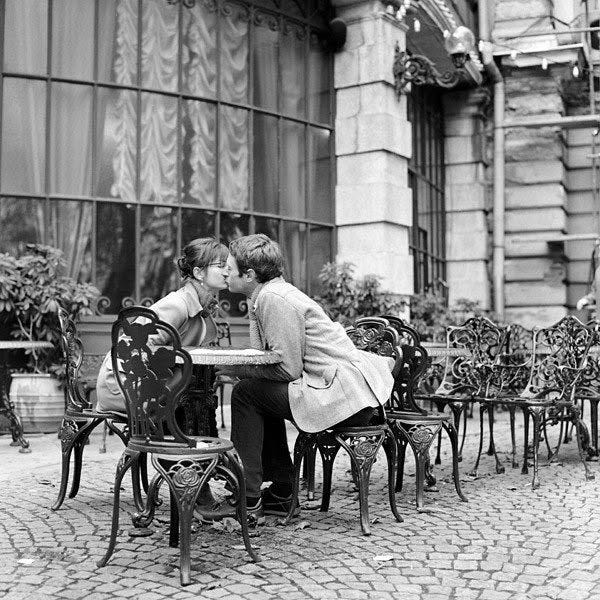
The predictability argument, for instance, doesn’t really hold up under scrutiny. Cailey Hall, writing for the Los Angeles Review of Books, compares romance novels to sonnets:
I like to think of romance novels as not dissimilar from sonnets. Both are constrained by certain expectations: 14 lines of iambic pentameter and a handful of possible rhyme schemes, on the one hand, and necessary plot points — the protagonists meet, their relationship develops, problems arise and are mostly resolved — on the other. Yet despite — or perhaps because of — these constraints, it is still possible to produce new, exciting, and even brilliant work within them. At the same time, as many romance readers have noted, the generic conventions of romance also offer what I see as a kind of consolation. In contrast to most things in life, romance guarantees ‘an emotionally satisfying and optimistic ending,’ although the journey there can take many directions.
Reframing the happy ending as formal commitment is interesting to me. In this way, the constraint and formulaic nature of the genre does not have to be limiting, it is in fact the point. And more than that, Hall argues that romance novels consistently achieve something that sounds almost banal but is, in fact, quite radical:
While there is no way to systematically account for the thousands of novels published every year — or for the ways readers respond to them — I have found that almost all of the romance novels I have read achieve something that sounds mundane, but remains quite radical: they model a form of female happiness and fulfillment still lacking in most canonical works of literature… these novels not only depict relationships that involve negotiation and growth, but also allow female protagonists to experience a kind of personal, sexual, and professional fulfillment that does not feel like an unattainable fantasy.
Or, as the romance novelist Jenny Cruisey puts it, “[m]odernism has convinced us that suffering and losing is more valuable than suffering and winning. Romance fiction says that this isn’t necessarily so and constructs positive, uplifting narratives to demonstrate that.” LOL. I mean. Fair.
So maybe what I’m resisting isn’t predictability. Maybe it’s the idea that happiness could be… allowed?!

The sentimentality objection is where it gets even more uncomfortable. Because if I am honest, what I’m really saying is: I have internalized a literary hierarchy that ranks emotional withholding above emotional exuberance. I have read enough to know that this hierarchy has a long and specifically gendered history. I’ve spent the past year publicly dismantling my belief that analytical reading was serious and emotional reading was indulgent and yet here I am, applying the exact same logic to an entire genre. As I judge an entire genre for being too much of a provocation, I remind myself that I actually love to be moved by a piece of writing and feel it’s nails down my skin. I don’t need everything I read to MEAN something profound, I just need it to mean something to me.

The prose objection might be the most defensible, and also the one I’m least qualified to make, since I haven’t actually read enough romance to know whether it’s true. For this one, I just apologize.

My friend Marco Marquez, who shares a lot of my taste in literary fiction and also reads romance, told me this:
Outside of the Twilight novels from my youth, I spent most of my life with this very tunnel-visioned view of what the romance genre was. I assumed it was strictly “bodice rippers” or the high-intensity smut ala Fifty Shades of Grey. But I swiftly realized that the genre isn’t a monolith.
At the height of the pandemic, I remember speaking to a friend who told me that “every story is a love story if you manage to look at it from the right angle.” And that changed my perspective on reading romance, completely. Whether or not a novel ends with a “happily ever after,” there is relatability and romance to be found in yearning, fleeting moments of clandestine love, and more so as of late…the intersection of romance and mental health. I am very much a mood reader, and the romance genre, I’ve discovered has many flavors, spices, and a bit of something for everyone…PERFECT FOR ME!
There are the tropes: enemies-to-lovers, fake dating, sports romance, etc. There are queer romance and hetero romance. Some romance books are saccharine, like Hearstopper by Alice Oseman or See You At The Finish Line by Zac Hammet. Some are perfect as vacation reads, like Beach Read by Emily Henry or Just for the Summer by Abby Jimenez. Some are very spicy palate cleansers best suited for in between heavy reads, like Winging It With You by Chip Pons or Heated Rivalry by Rachel Reid. Others centered on yearning and tender clandestine moments of budding love, like Swimming the Dark by Tomasz Jedrowski or Lie With Me by Philippe Besson.
The diversity within the genre, is why I love reading romance. I like to mix it up. Sometimes I want something simple and sweet, and other times I want something to devastate my soul.
My friend Jenna Clare, who also reads across both literary fiction and romance, offered a useful distinction: there are romantic books that aren’t technically romance — more literary, less centered on plot mechanics — and then there are the ones that will, in her words, rot your teeth and keep you reading until midnight. Both are valid. Both serve a different need.
And some of the titles she mentioned — queer autofiction translated from French, historical fiction about slow-burn longing — honestly align almost perfectly with my previously well documented reading kinks

When I was working on my interview with Justin from Fly by Midnight, I ended up listening to a lot of their music — light, poppy, unapologetically romantic. I especially loved listening to it on my way to and from work as a way to just get into a happier mood for my co-workers and for my family at the end of the day. And I could feel it working.
Me (whistling)…
Husband: Since when have you become a person who whistles?!
Me: I have been listening to Fly by Midnight, and it’s making me… I don’t know… happy?!
Husband: Aha.
Me: I keep reading all these super intense books that just wreck me. I’ve been wondering if I should maybe try to read romance novels or something lighter like that so that I can feel more…
Husband: You mean… like a normal person?
I carry a chip on my shoulder about not being well-read. I have been in catch-up mode since I started taking reading seriously, and I have made every book count in the heaviest possible way. Month after month of gorgeous, devastating literature. And somewhere in that project I seem to have decided that lighter meant lesser. That pleasure for its own sake was a distraction from the real work. That reading should always do something profound to me.
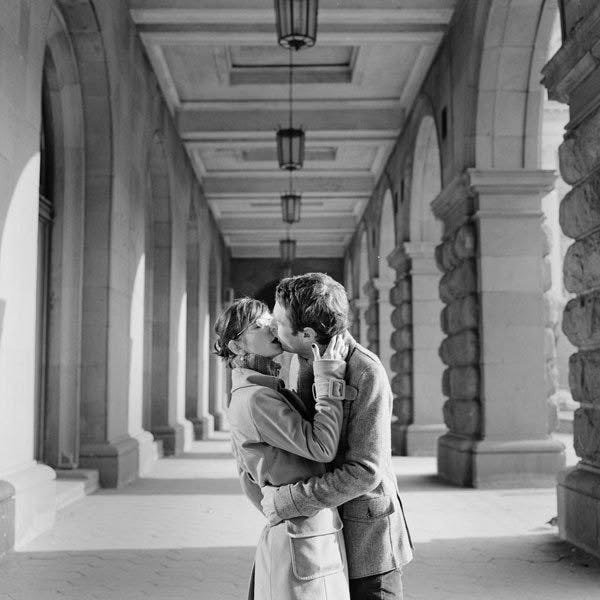
But… wait a minute. Maybe there is something to the idea of introducing a little bit of lightness and romance into an otherwise grown-up and serious (reading) life. I desperate need help to lighten up a bit. Also, I think that bringing in something easier might actually open up some mental space to allow me to recover from the heavier books and let me rebuild some mental stamina for the next book that will destroy me?
I reached out to Book of the Month and they immediately agreed to partner with me and let me pick a book from their April line-up that fit the bill. Beyond romance, I think BOTM is particularly great for this kind of genre-seeking and experimentation. Each month has a diverse but contained set of books to choose from… I was specifically interested in romance but their April line-up included upmarket, fantasy and literary fiction.
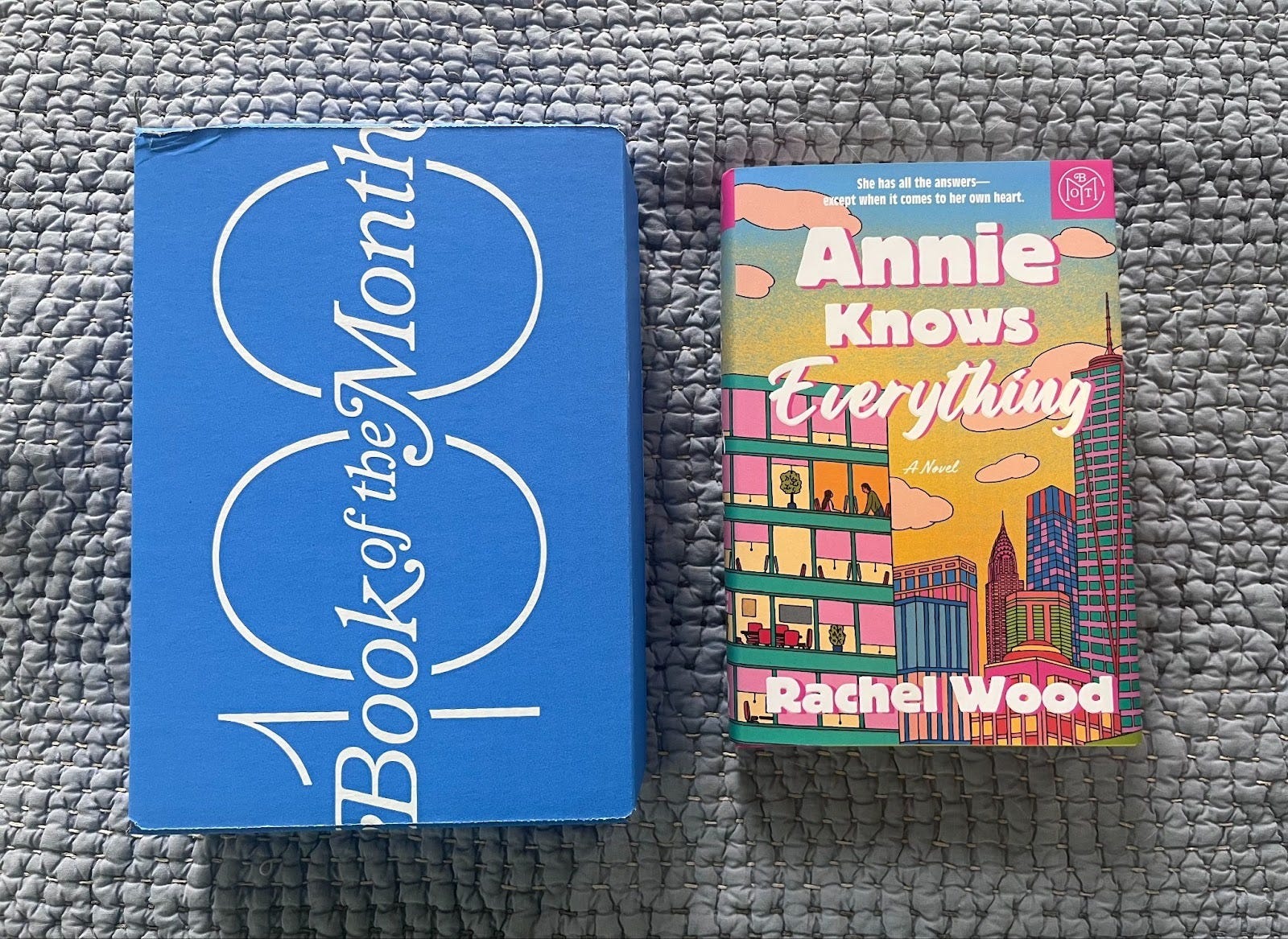
This month, BOTM are also celebrating their 100th anniversary. If you join in April, you can get your first book for just 100 cents with the code HUNDRED. I chose Annie Knows Everything by Rachel Wood: a novel that seems to sit right on that edge I’m curious about: contemporary, but with relationships at its center. It’s a workplace romance set in a tech company so I thought, given my professional background, I could be a fair a judge of how well the author has depicted this world I am familiar with.
I will also work off Marco’s and Jenna’s lists to see if maybe I can find a sub-genre of romance that works for me. But in the meantime, please:
🤓 Help me think through all of this!
And please, if you are able, do share your personal experience with romance!
What is this?! Why the resistance? Where am I wrong?
If you have been similarly prejudiced against romance (or any genre for that matter) but changed your mind, what happened?
And if you manage to read outside of your core genre, please talk to me about the logistics of it! How do you fit it all in and how do you maintain focus?
Thank you, Book of the Month, for generously sponsoring this post!
I love your newsletter and have never commented before, but as a romance reader/writer I can't ignore this topic! One thing to keep in mind is that there are romances can ALSO be devastating in their journey, just like literary fiction...but they always promise to put you back together at the end. The first one that came to mind is Seven Days in June by Tia Williams, but I'm sure other readers have more suggestions!
I feel like I’ve had some similar internalised debates, not about romance specifically but maybe more commercial-leaning, “easy” fiction. Since becoming an “online” reader I’ve re-trained myself to read more critically, to lean into literature, to read serious books very seriously. And I have loved every moment.
But I had a revelation recently: reading is actually not my job. I HAVE a job, which is rewarding but demanding. It is in between all my other responsibilities that I choose to immerse myself in books. If I denied myself the joy of simply reading a gulpable and zeitgeisty commercial or genre-led book every now and then without feeling pressure to go deep on it, then I am taking away the pleasure that IS reading as recreation. The truth is there are so many really smart people here whose work is tied to critical reading and I admire that so much. But after my intense 9-5, after caring for ageing parents, after being there for friends and family in different life stages to me, I’ve learnt to simply lean into the times when I want to sit on the couch with something entertaining and enjoy it with no strings attached 😊