


She’s self-critical, he thinks, but that leads to her not making the most of herself.
― Jenny Erpenbeck, Kairos
A few years ago, I was pruning the hydrangea bush in my backyard — the kind my grandmother used to grow, the one I’m named after. I had earbuds in, listening to an interview with Mary Karr. Karr, a converted and devout Catholic, said she couldn’t quite describe God, but that if you would pay attention, you’d feel its presence daily. Just then, a breeze moved across my face. I paused — and I know this sounds a little kooky — but I became certain my grandmother was saying hello.
A lot of my July reading felt like that breeze. Not merely biographically relatable, but spiritually resonant — like I’d stumbled into an intellectual and emotional space I’d been circling for years. As an immigrant, I know that belonging is never simple — especially once you begin crossing literal or metaphorical borders. Generational, national or class differences sharpen how we experience ourselves and others. But as my reading list reminded me last month, those very differences can also be magnetizing. They draw us closer to the marrow of who we are. They push us to the edge of self-betrayal but also, eventually, help us earn our self-respect.
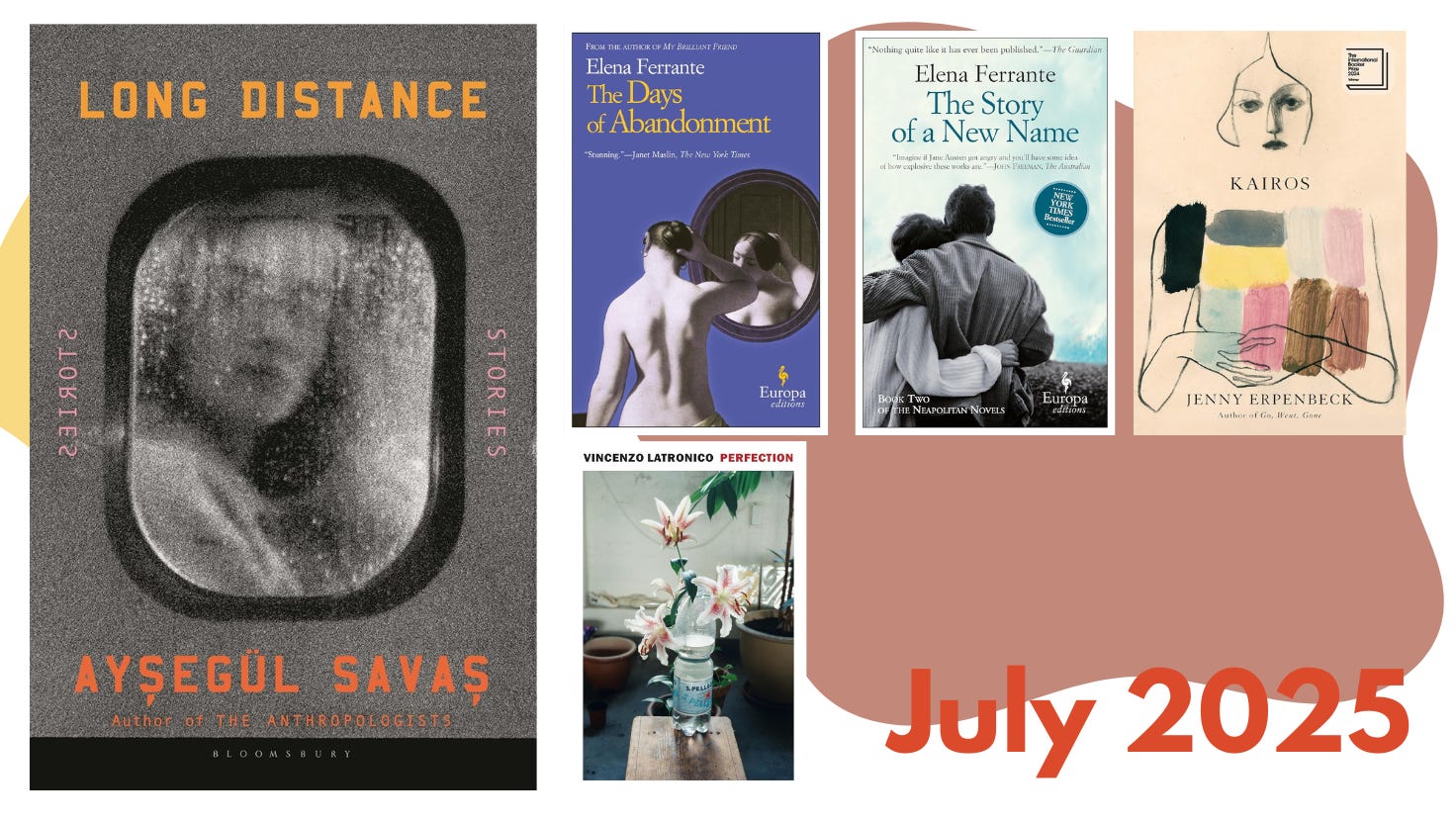
I loved everything I read in July, but it was Savaş and Erpenbeck that resonated most deeply. In Savaş, I found young women living far from home, navigating their inner lives through everyday, opaque interactions — with mentors, estranged parents, friends who no longer feel close. In Erpenbeck, I encountered a love story born in a Berlin I once brushed against: the final years of the GDR and the uneasy afterglow of its collapse. The love was real, but the shared cultural logic that once held it up was already crumbling.
These worlds weren’t exact replicas of mine, but their emotional terrains felt eerily familiar. They gave shape to something I’ve long felt and constantly chase to understand: what it means to live between languages, between histories, between relationships, between selves. How heartbreaking those seasons of life can be. But also how they are, paradoxically, the most life-affirming.

📚 Books mentioned:
The Days of Abandonment by Elena Ferrante
The Story of a New Name by Elena Ferrante
Kairos by Jenny Erpenbeck
Perfection by Vincenzo Latronico
Long Distance by Ayşegül Savaş

📚 The Days of Abandonment — Elena Ferrante
When Olga’s husband suddenly leaves her and their children, she unravels. Ferrante delivers a ferocious, psychologically intimate portrait of a woman in crisis, tracing Olga’s descent into grief, rage, and isolation in the aftermath of abandonment. Trapped in their apartment with a sick dog and her own obsessive thoughts, Olga teeters on the edge of madness before clawing her way toward clarity. Brutal and unflinching, the novel explores motherhood, the disorientation and identity crises that come in and out of focus in a long-term marriage, and the destabilizing effect of romantic betrayal.
I read this book in tandem with Ash T. and we texted messages of support to each other. First timidly: how far in the book are you? And then with a real sense of concern: are you doing OK? If you’re feeling too peaceful and well-rested, this book might be exactly the antidote you need. The escalating claustrophobia and Olga’s apparent inability to process her changed circumstances are almost too hard to bear. So hard, in fact, that in my real-life book club of seven, at least five people did not finish it.
To you, I will say what I said to them — that even though this book is incredibly difficult to read (there are scenes of animal abuse that, in my opinion, felt borderline if not fully superfluous)... Ferrante eventually releases the pressure valve. The final section offers clarity and wisdom and an off-ramp from madness that feels relieving without being too perfectly neat.
In many ways, I experienced this book similarly to Elena Knows by Claudia Piñeiro — physically suffocating to such a high degree that at some point I felt I was becoming the protagonist. It was completely unpleasant yet fascinating, like when you’re deep in a dream and start looking around, observing yourself. A truly embodied experience.
📚 The Story of New Name — Elena Ferrante
I am all in on the Ferrante train now, I guess… I read My Brilliant Friend last month and felt compelled to keep going. In this second Neapolitan novel, Lila and Elena move deeper into adulthood. Lila, now married to a wealthy grocer, bristles against domestic confinement; Lenù, determined to escape the neighborhood’s grip, immerses herself in her studies. Their friendship — fierce, competitive, co-dependent — remains the novel’s charged core. Through betrayals, reinventions and shifting fortunes, Ferrante charts the emotional and intellectual awakening of two women shaped and scarred by their environment.
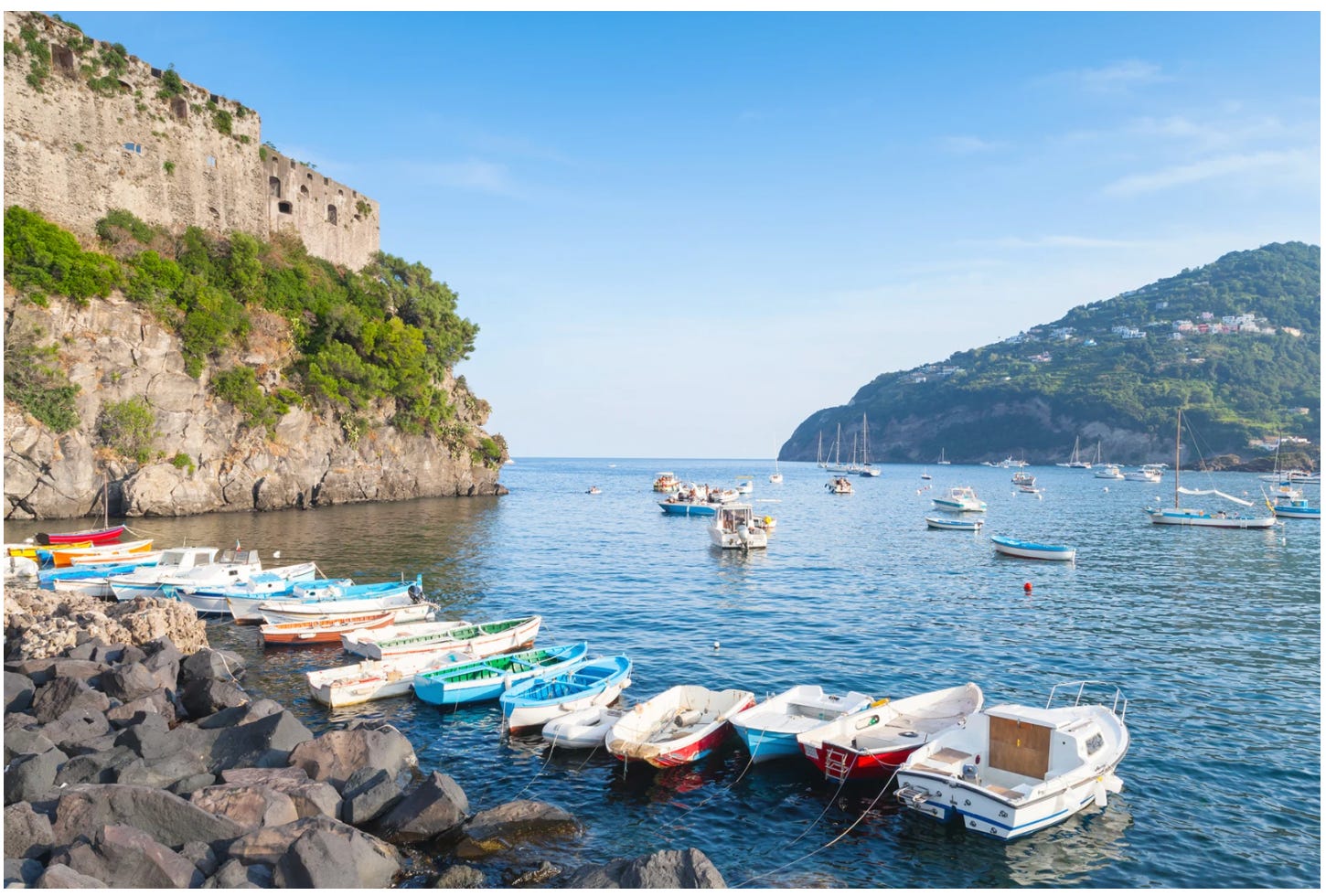
I told my friend Rosie — who is my Ferrante fairy godmother — that in a way this series feels to me like a smart woman’s telenovela…The relationship drama, the gossip, the claustrophobic feeling of knowing that everyone is watching everyone SO CLOSELY… it’s almost too much. This won’t make sense to you if you haven’t read the book BUT when Lenù uses her copy of Beckett to kill mosquitos on Ischia because she doesn’t think Nino would be interested — and then he reads it overnight in a fit of Lila-obsessed energy? I wanted to die of secondhand rage and humiliation.
Speaking of Lenù — who gets on my every last nerve — I have to admit I may be triggered because I see my younger self in her. The self-denying impulses when everything in her is screaming to go after who and what she wants (I am desperately trying to avoid spoilers here)... The constant gawking and comparison, the self-definition and identity entirely structured around the image of her friend… It’s heartbreaking, annoying and so compelling. I mean… who has not…?!
Honestly, guys, I have nothing smart to say about this one. I feel like I am reading snippets of the most shameful moments of my youth but filtered through Ferrante’s crystalline empathy. So much so that I am both raging and extending compassion to my younger self. At the tender age of 44, I am now finally able to recognize and accept that some shitty little girls did some shitty little things to me and I was not wrong for feeling wronged. CLOSURE is the price we pay.
📚 Kairos — Jenny Erpenbeck
Set in East Berlin during the final years of the GDR, Kairos follows a passionate, destructive / toxic / abusive / life-changing love affair between a teenage girl and a much older writer. The novel unfolds in fragments, as their love turns into obsession and power dynamics shift under the weight of politics and aging. Erpenbeck masterfully interweaves private and historical collapse — what happens to a country and to a person, when the structure that held them up dissolves? It is so intense!
This book to me is an exploration around the failure to notice deep and profound change within ourselves, within our loved ones and within our broader historical contexts… until it’s too late. The novel is autofictional and I saw someone mention that the dissolution of the relationship at the core of the book is an allegory of the collapse of communism in Europe. That reading feels a little too tidy to me — maybe I wasn’t reading closely enough. What I did love was the East German backdrop to the affair. The emphasis on art consumption and production, so familiar to anyone raised in the Soviet bloc, gave this messed-up relationship a kind of romantic glow. I felt really drawn to this story of artistic awakening through the guidance of an older lover. I may burn in hell for saying this because the power dynamics in this relationship are totally messed up, but I found this aspect of the story so fucking sexy.
When I shared that I was reading Kairos in our Friday Book Chat, several people mentioned that they’d read Erpenbeck but this particular book was not their favorite. Someone suggested that maybe it was “too German”... and... I mean, maybe. But for those of us who grew up in the pre-1989 Eastern bloc, this narrative doesn’t feel impenetrable — it feels familiar. Alternatingly hilarious and depressing. I loved it.
🤓 Question for anyone with familiarity of the former Soviet Bloc — as I was reading this, I had the realization that infidelity and extramarital affairs seem to be really normalized in Bulgaria of the 1970s and 1980s. Reading this book gave me similar vibes about the former GDR. Am I correct in picking up on that? Do we have evidence or understanding of how/why that might have been the case?
📚 Perfection — Vincenzo Latronico
My second Berlin book this month!!! In Latronico’s hyper contemporary novel, an Italian couple relocates to Berlin in search of a freer, more authentic life as the city itself experiences rapid transformation. As Anna and Tom (re) invent themselves among the city’s creative class, they begin to perform their identities as much as live them. They live in the right type of apartment, do the right type of work, go to the right type of art show or music venue. Play with a gaggle of fellow expats who are in town chasing similar validation.
The novel explores the dissonance between Instagram life and offline realities, between aesthetic purity and emotional truth. It dissects the longing for a perfect self in our perfectly curated world. It’s a sharp, modern story about artifice, alienation and the quietly consuming pressure to be interesting… The book is essentially a fictional companion to Kyle Chayka’s Filterworld and either borrows or simultaneously uncovers the same behaviors and patterns… For example, the importance of coffeeshop culture for digital nomads features prominently in both. But then again… it does… and given how deeply anthropological this novel is, it makes sense that many of the most ridiculous observations of what it’s like to be a young creative person in a cosmopolitan city such as Berlin… felt both familiar and trite.
We bought this book while in Berlin, my husband Kyle read in on our flight back to the States and when it was my turn, he handed it off and said… you will like how Berlin this novel feels. Then we got stuck in NYC due to weather related flight delays at JFK and had to spend a few days in Brooklyn. One night we were walking around Williamsburg — grabbing pizza, bookshopping at McNally Jackson and bopping into some clothing stores because our suitcases were still in air travel purgatory and we literally needed clean socks. At some point Kyle stopped in the middle of the sidewalk, grabbed my hand and said… take all of this in, how everything around us is made just so for YOU… and think of this spot when you are reading Perfection. It was such a good observation. In writing a Berlin story, Latronico has also perfectly captured the current zeitgeist. It’s not just Berlin that has become a caricature of itself. It’s everywhere all at once. Reading this book made me both tragically uncomfortable with the protagonist’s cliched choices but also left me kind of scratching my head because… what is one supposed to do?!
📚 Long Distance — Ayşegül Savaş
Latronico doesn’t offer a solution, but I found one anyway — in one of my favorite writers right now.
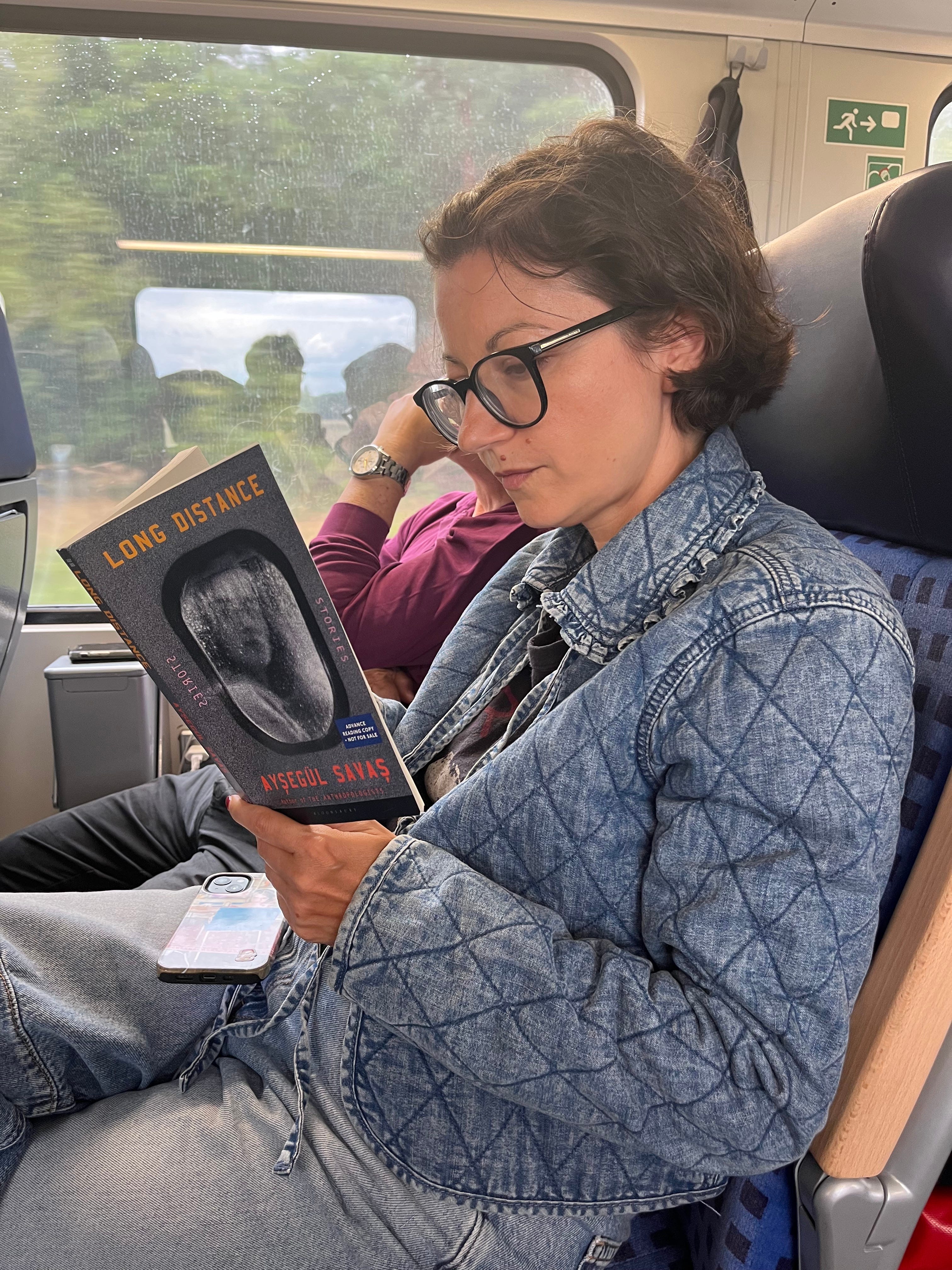
This is Savaş’s first short story collection, and I was nervous about it because I love her novels so much. But she delivered. Savaş is Turkish, lives in Paris, and writes about modern life with extraordinary precision and warmth.
Her characters — artists, students, expats — navigate the aching space between intimacy and estrangement. Often set in European cities (Paris, Istanbul, Marseille), the stories say so much with so little.
Real estate troubles them. Friendships fray. Rooms are shared. Savaş writes:
I could not really afford to shop there, or rather, I could afford only that — my life a facade of beautiful objects and luxurious rituals, without any sturdy foundation.
These stories perfectly capture our contemporary condition — the over-fixation on how others perceive us, the mundanity of modern life, the lost ability to fully express how we feel about our loved ones, the superficiality of our closest friendships. In many ways I feel like she is looking at the same people as Vincenzo Latronico or Kyle Chayka but somehow she manages to write about them with less cynicism or condescension.
Savaş is very much a writer of OUR time, of THIS time… She sees us. But what I love about her writing is that somehow she refuses to give up on us. In her stories of these very contemporary characters, there is always room for warmth, humanity and connection. Friendships falter but persevere, pregnancies enliven then disappoint but don’t destroy us, family visits feel exasperating, we are unable to express what we feel deeply … and yet there is comfort in the sadness that follows, beauty in the failure, a possibility for better communication down the line. I really love her for that.
An idea that Savaş keeps returning to in her work, including this short collection, is the concept of cross-generational (female) friendship. I love her young - older woman pairings that somehow put us in conversation with ourselves — looking toward our future selves, looking back on our younger selves… My favorite story of the collection is We Are Here — the one about the exchange students in Russia. After reading the story, I made a list of people who helped me out in my 20s. I always felt that because I was young and stupid, I never thanked them enough for what they did for me. I am now going down the list and writing cards. That’s what I love about Savaş’s work. It calls you out but does so gently. And it leads you to a place where a possibility for “better” begins to emerge.
Belonging is complicated but love and friendship make it less so.

These books weren’t chosen to fit a theme, but they ended up speaking to each other — and to me — in unexpected ways. They offered stories of dislocation and reinvention, of identity shaped by place and strained by power, of people moving through life in fragments and recalibrating as they go. None of the characters in these books belong easily or comfortably but all of them are searching. And maybe that’s the common thread — the ache of not quite fitting and the quiet beauty of finding connection anyway.
❤️ Favorite books of 2025:
January - Pond by Claire-Louise Bennett
February - Open Throat by Henry Hoke
March - Swimming Home by Deborah Levy
April - Assembly by Natasha Brown
May - The Wilderness by Ayşegül Savaş
June - Checkout 19 by Claire-Louise Bennett
July - Long Distance by Ayşegül Savaş

🤓 To wrap up, I have some questions for you:
What does belonging mean to you — and have you ever found it in an unexpected place?
Which of these books have you read, and what was your emotional or intellectual response?
Reading Long Distance made me an Ayşegül Savaş. I am truly impressed with her work, no notes. Have you read her yet?
Loved Kairos. my favourite so far this year. No East Euroean connections, apart from an aunt who crossed over from East Berlin to marry my uncle in the 1950s. Her other book, about the house inhabited by several different people over the year come in as second best.
Very interesting to read your thoughts on Kairos (as someone who hated it)! It was the way the narrative was structured, rather than the content itself, that bothered me. While I can't say I LOVE a strange age-gap relationship with an older man and younger woman, I thought it was clever that she used them as representations of the western/eastern blocks.